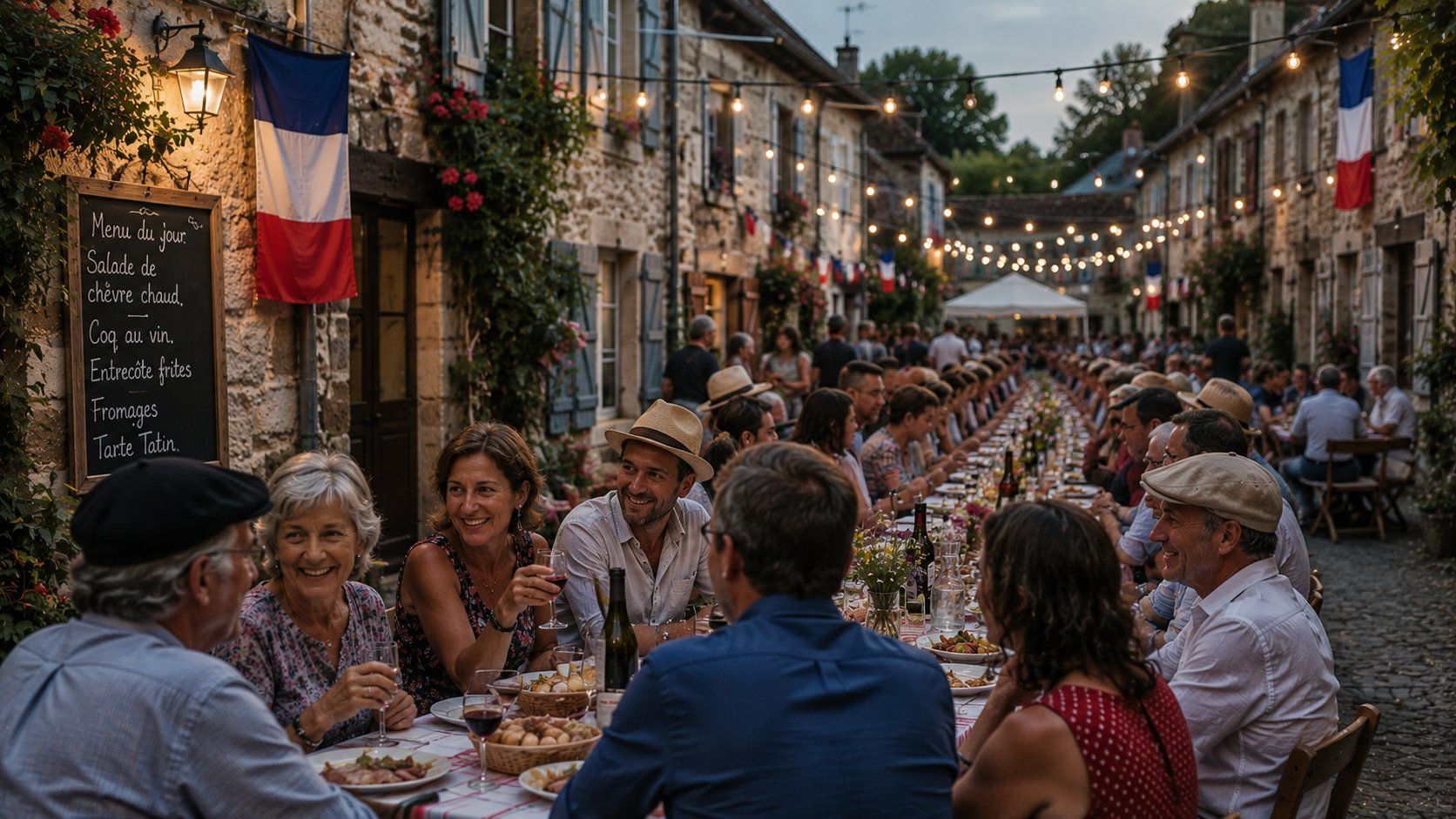
These events, gathering thousands of participants in enormous tents, are built around the communal consumption of local food, singing, and feasting “live,” which constitutes a stark alternative to digital ways of spending time.
One of the main entities responsible for promoting this trend is the organization “La Canonnade Française” (the French Cannon), which through its events celebrates local cuisine and traditional forms of community life. Participants, by paying a set fee, gain the opportunity to take part in a many-hours-long event whose roots hark back to old rural and urban festivities.
This phenomenon, although at first glance purely cultural and recreational in character, has become the target of sharp criticism from mainstream media, including the British BBC and German outlets. These banquets are described as “dangerous” on account of their alleged ties to right-wing political circles. What raises controversy is that one of the shareholders in the entities organizing these feasts is a well-known right-wing activist who funds conservative think tanks.
Comparisons of the French banquets to German festivities of the “Zeltfest” type, to Bavarian feasting to the accordion, or to traditional Polish feasts point to the universal character of this way of spending time in Europe. For centuries these traditions have served to build local bonds and have allowed for a free exchange of ideas in a more relaxed atmosphere, one that goes beyond the rigid frame of public correctness.
An analysis of the dispute surrounding the banquets reveals deep tensions between traditional forms of social life and the modern demands of political correctness. While the media and left-wing parties appear to distance themselves from such events, public interest in feasting seems to be growing, which is interpreted as a need for authenticity and a return to one's roots. Traditional community life is being confronted with accusations of right-wing radicalism.
Despite media criticism, these events draw thousands of people seeking direct relationships and the cultivation of local traditions.