The entry into force of the EU Migration Pact opens a new chapter in Poland's relations with European institutions and its neighbours. Although Warsaw currently benefits from a temporary exemption from the mandatory solidarity mechanism, the prospects of extending this status beyond the end of the current year are unlikely.
Analyses suggest that the European Commission may take a firm stance. Brussels will probably point to the fact that other member states are taking in larger numbers of migrants, which will weaken Poland's argument about bearing a particular burden. As a consequence, Warsaw may face a difficult choice: either directly admitting people applying for asylum, or bearing equivalent financial or logistical costs on behalf of the states of southern Europe.
In parallel with the legislative processes in Brussels, an operation of intensified controls has been under way on the Polish-German border, initiated in autumn 2023. The decision to reinstate controls at the internal borders of the Schengen area, motivated by the desire to curb illegal migration, has become an enormous staffing and financial burden for the German Federal Police (Bundespolizei). Thousands of officers have been deployed to patrol not only the border line itself, but also the border strip of up to 30 kilometres in width. This is accompanied by an enormous amount of overtime and the exhaustion of personnel. Despite criticism from EU institutions, the German Interior Ministry maintains the necessity of these measures, which gives rise to frustration among police union members.
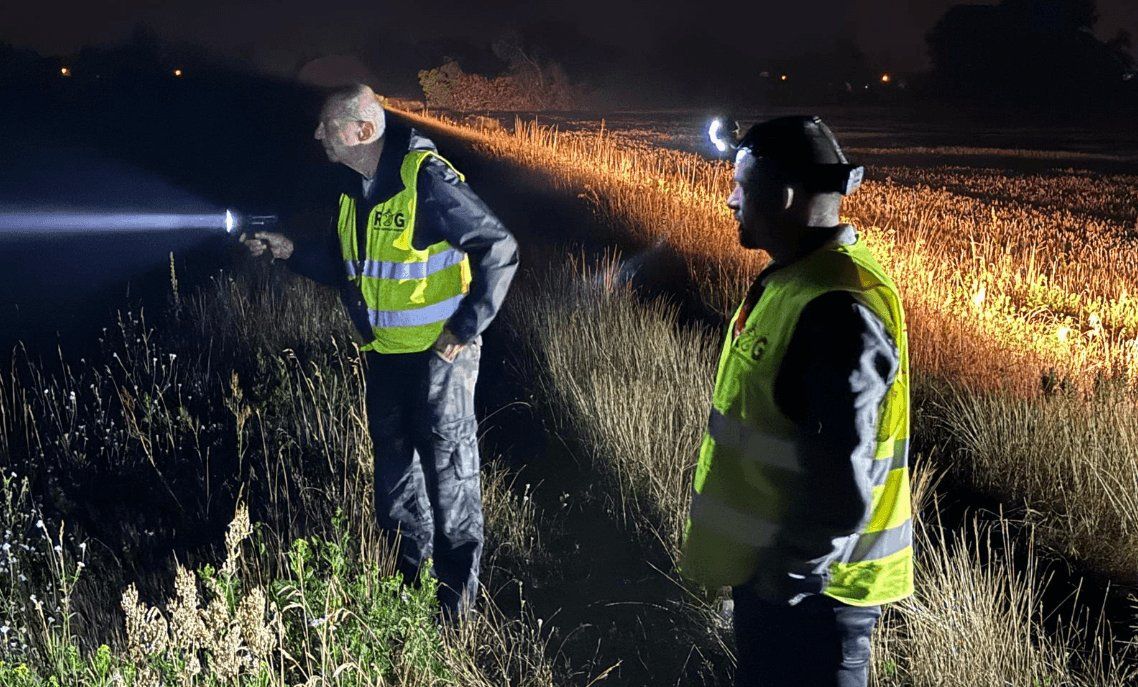
The practical dimension of these measures is the functioning of joint Polish-German patrols, which, however, are characterised by a clear operational asymmetry. Data indicate that the vast majority of joint operations are undertaken on Polish territory, with significant participation by German officers. The presence of Polish police officers on the other side of the Oder is far less frequent and less prominent. The lack of transparency regarding the rules of this cooperation raises questions about the sovereignty of uniformed services operating on the territory of a foreign state. At the same time, a phenomenon of “ostentation” in the German police's actions on the Polish side of the border can be observed. By some it is interpreted as an attempt to acclimatise the local community to the presence of foreign services, or as an element of a deterrence strategy.
A key element of the cross-border dynamic remains the issue of so-called pushbacks, that is, the return to Poland of people who do not have the right to stay in Germany. This practice, although systematic, has undergone a certain quantitative reduction, which is attributed to the activity of grassroots movements monitoring the border. Pressure from civic organisations has forced the services to exercise greater restraint, transforming the mass character of the returns into operations of a smaller scale. At the same time, Germany is seeking ways to optimise the costs of controls. It is introducing modern technologies, such as drones monitoring forested areas, as well as a rotation of personnel, using, among others, young officers for “combat tests” in difficult terrain conditions.
The situation on the Polish-German border is evolving towards a permanent, militarised system of surveillance that goes beyond the framework of the traditional understanding of the Schengen area. The Migration Pact, instead of bringing the expected easing of tensions, is becoming the seed of new disputes over the division of costs and obligations among member states. The asymmetry in the services' actions and the growing role of technology in surveillance point to a lasting shift in the security paradigm in Central Europe. The border is ceasing to be merely a line of demarcation – it is becoming a space of intense, though often opaque, political and operational rivalry.