The images from Berlin went around the internet within hours: Polish activists in handcuffs, a few dozen metres from the stone that the Germans themselves had erected in memory of the Poles they murdered. And immediately the argument broke out – was this a brutal crackdown, or a routine intervention against an unregistered assembly carrying a large cross. I'll admit frankly: that argument interests me the least. Because beneath it lies a question that no one in Warsaw is in any hurry to answer today – where, for heaven's sake, was the Polish state.
What we know for certain, and what only from a single camera.
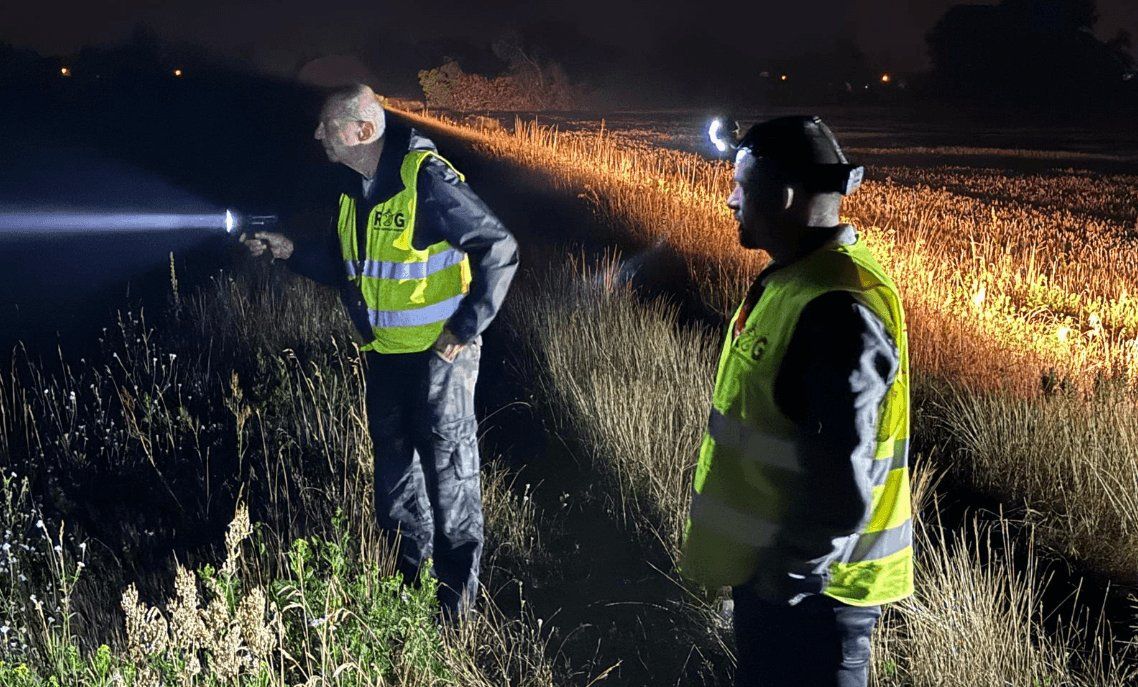
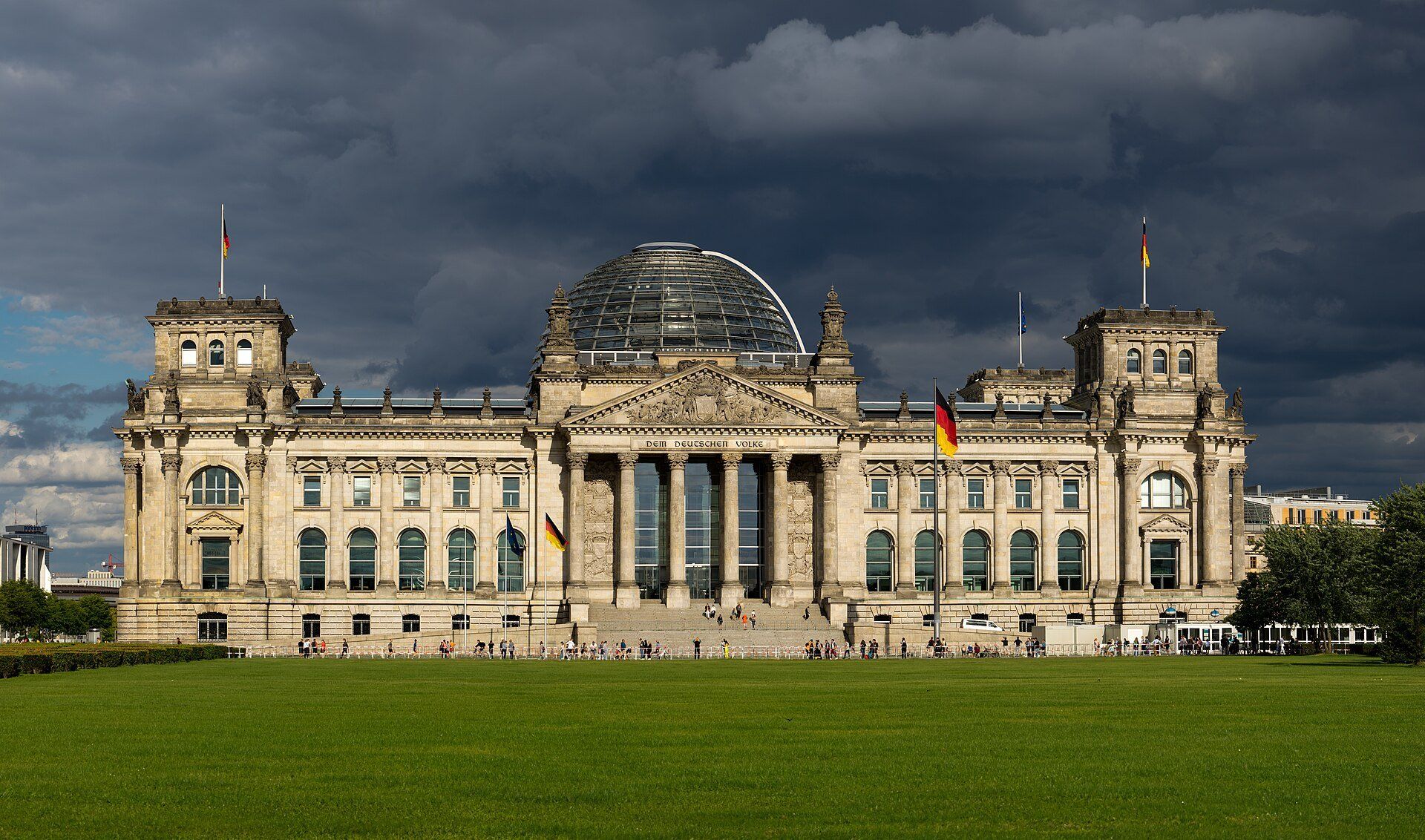
Let's start with the facts, because more emotion than substance has built up around them. On Tuesday, 16 June, Robert Bąkiewicz, together with a dozen or so activists of the Ruch Obrony Granic (the Border Defence Movement), appeared near the Reichstag with a large wooden cross and banners, intending to set it up beside the stone commemorating the Polish victims of the German occupation. The police – as Polsat News, Wirtualna Polska and Interia report, citing the Polish foreign ministry (MSZ) – proposed approaching the memorial without the cross and banners, or one at a time. The group set off with the cross, force was used, some people were handcuffed, and one person remained in detention. That much is certain, and that much our diplomatic service confirms.
All the rest – that it was a “crackdown”, that someone's ribs were broken, that the cross ended up on the ground – comes for now from a TV Republika broadcast and from people close to Mr Bąkiewicz. It may turn out to be true. But at the moment I am writing this, no independent source confirms it, and the German mainstream media are saying nothing about the matter at all. So let us keep these two orders of things separate – because that is precisely what distinguishes journalism from cheerleading.
And one more thing that few people remember today: this is not the first time. Back in December, Bąkiewicz's people were detained by the German police in Berlin when they tried to put up a cross at the same place of remembrance. So we are not dealing with a one-off escapade, but with a recurring scenario – and that is the first sign that someone on the Polish side ought to have prepared for it.
The memorial that still does not exist.
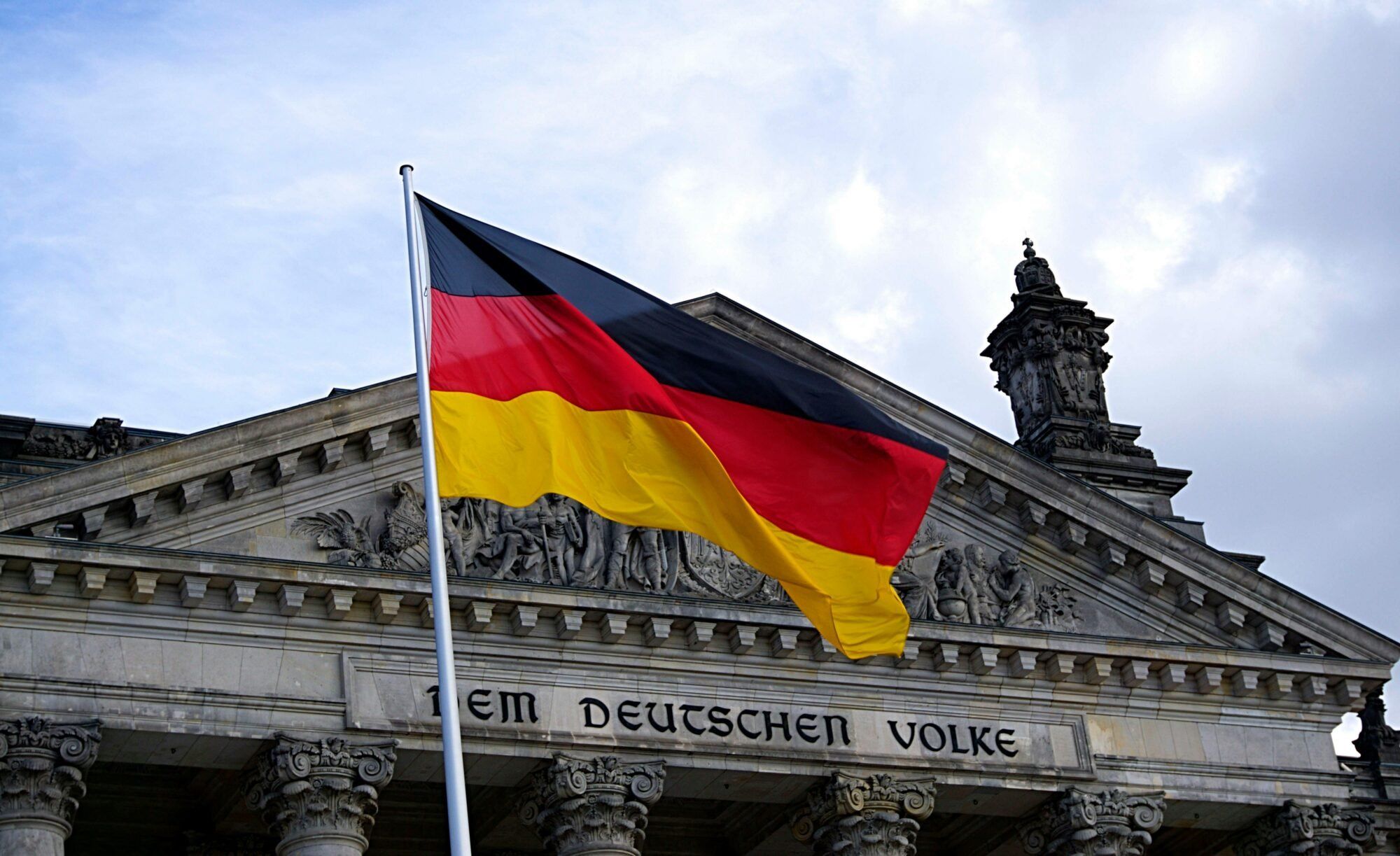
It is worth knowing which stone we are talking about, because all the symbolism resides in it. A year ago, exactly on 16 June 2025, the Germans unveiled in Berlin a temporary “Gedenkort für Polen 1939–1945” (the memorial to Polish victims) – a large boulder with a plaque, right by the Reichstag, on the site of the former Kroll Opera, from which Hitler announced the attack on Poland. The word “temporary” is the most important one here. For a memorial worthy of the name, together with the Deutsch-Polnisches Haus (German-Polish House), still does not exist: the design competition is only due to begin this year, and the money has been set aside in the budget for 2027 or 2028. In fairness one must add that the German side has announced the construction of a permanent memorial, and Chancellor Merz spoke explicitly of initiating it.
And now the proportions, because they say the most. That same boulder for the Poles is looked after by the same foundation that runs Berlin's Memorial to the Murdered Jews of Europe (Pomnik Pomordowanych Żydów Europy) – the one opened in 2005, made up of 2711 concrete stelae, whose construction alone cost 27.6 million euro, and together with the value of the plot of land handed over by the German state – around 67 million. I do not place these victims on the same scale, because that would be repugnant. I am positing something else: a thesis about pace and about hierarchy. The memorial to one group of victims has stood for twenty years. The memorial to the others, their neighbours from across the Oder, is – more than eighty years on – still a boulder “for the time being”.
Where was the Polish state
And here we come to the heart of the matter, namely to who was missing. When a citizen of one state is detained on the territory of another, international law is, as it happens, unambiguous. The Vienna Convention on Consular Relations of 1963 states plainly: the authorities who detain someone are to notify the consul without delay, and the consul has the right to visit the detainee, to speak with them and to arrange their defence. This is not a courtesy or a gesture of goodwill. It is the obligation of one side and our entitlement.
In my view, the Polish consul should have shown up there within fifteen minutes. He should have been there from the start. Instead, it was the Radio Debata newsroom, and not the representation of the Republic of Poland, that tried to get through to the Berlin police headquarters for any information at all – and was brushed off. True, the MSZ later confirmed the whole incident and announced that the consul is clarifying the details. Except that “later” and “is clarifying” are decidedly too little when Polish citizens are being put in handcuffs beneath a memorial to Polish victims.
That is why I will say it plainly: the German ambassador should have been summoned to minister Sikorski that very evening – not for coffee, but onto the carpet. Poland knows how to do this when it wants to. As recently as November, the head of our diplomacy personally intervened with his German counterpart when an auction house there intended to auction off letters of concentration-camp prisoners – and the auction was called off. If we can muster firmness over an auction, then all the more should we be able to muster it when living people in handcuffs are at stake.
The obligation does not depend on sympathy.
I know what some of you are thinking now, because Robert Bąkiewicz divides people like few others. Former head of the Independence March Association, founder of the Ruch Obrony Granic – for some a defender of Polishness, for others a warlord of borderland militias. His court cases are a separate chapter. But – and this is a thesis I will defend – the state's obligation towards its own citizen does not depend on whether we like that citizen. It does not depend on his views, his party or his haircut. Either consular protection is owed to every Pole abroad, or it is a fiction.
And something else that sits deeper. We can argue about the cross, about the banners, about whether the assembly was registered on time. But the image of Polish citizens being put in handcuffs right there, beneath the stone commemorating Poles murdered by Germans, has a dimension that no assembly regulations can annul. There are places where form recedes into the background before the symbol – and the Berlin boulder honouring the murdered is exactly such a place.
Let's count it up coolly.
Looking at the whole thing without emotion, I see one uncomfortable conclusion. The Germans – albeit sluggishly and only after eighty years – have at least begun to make their examination of conscience towards the Polish victims: they are putting up a stone, announcing a memorial, running the German-Polish House. The trouble is that when this memory actually has to be fought for on the Berlin pavement, what is left on the Polish side are citizens alone – activists, journalists, random people with phones – and not their state. This is not a story about bad German police, nor about a good or bad Bąkiewicz. It is a story about a state that still has not learned to stand as a wall behind its own people before the cameras do it for it. And until it learns that, every further Tuesday like this one will repeat itself. Again.
What is certain in this matter and what is not: the detention of the Ruch Obrony Granic activists in Berlin on 16 June, the police's proposal to approach without the cross, and the fact that one person remained in detention while the consul is investigating the matter, were confirmed by the Polish foreign ministry (MSZ) and described by Polsat News, Wirtualna Polska and Interia. Berlin's “Gedenkort für Polen 1939–1945” was unveiled on 16 June 2025, and the permanent memorial and the German-Polish House are still only a project; the Berlin police themselves had, a day earlier, announced a ban on assemblies around the site for 17 June – on the anniversary of the unveiling and the 35th anniversary of the Polish-German treaty of good neighbourliness. The construction cost of the Memorial to the Murdered Jews of Europe, 27.6 million euro, is given by the Stiftung Denkmal foundation. I cite the Vienna Convention after the UN text. The sharpest accounts – of a crackdown and injuries – come for now solely from a TV Republika broadcast and from the family, and have not been independently confirmed. The assessment of the whole situation is my own.