On the night of 25 to 26 April, a car bomb exploded outside the police station in Dunmurry, Northern Ireland. Although no one was killed, investigators point to possible links with the New IRA, which once again raises questions about the region's security and the real scale of the threat after years of relative calm.
On the night of 25 to 26 April 2026, Northern Ireland was the scene of a bomb attack that claimed no lives but bore unmistakable links to the region's terrorist past. Outside the police station in Dunmurry, on the outskirts of Belfast, a van exploded with an improvised explosive device in the form of a gas cylinder placed in its cargo area. Thanks to the swift evacuation of nearby homes, no one was killed.
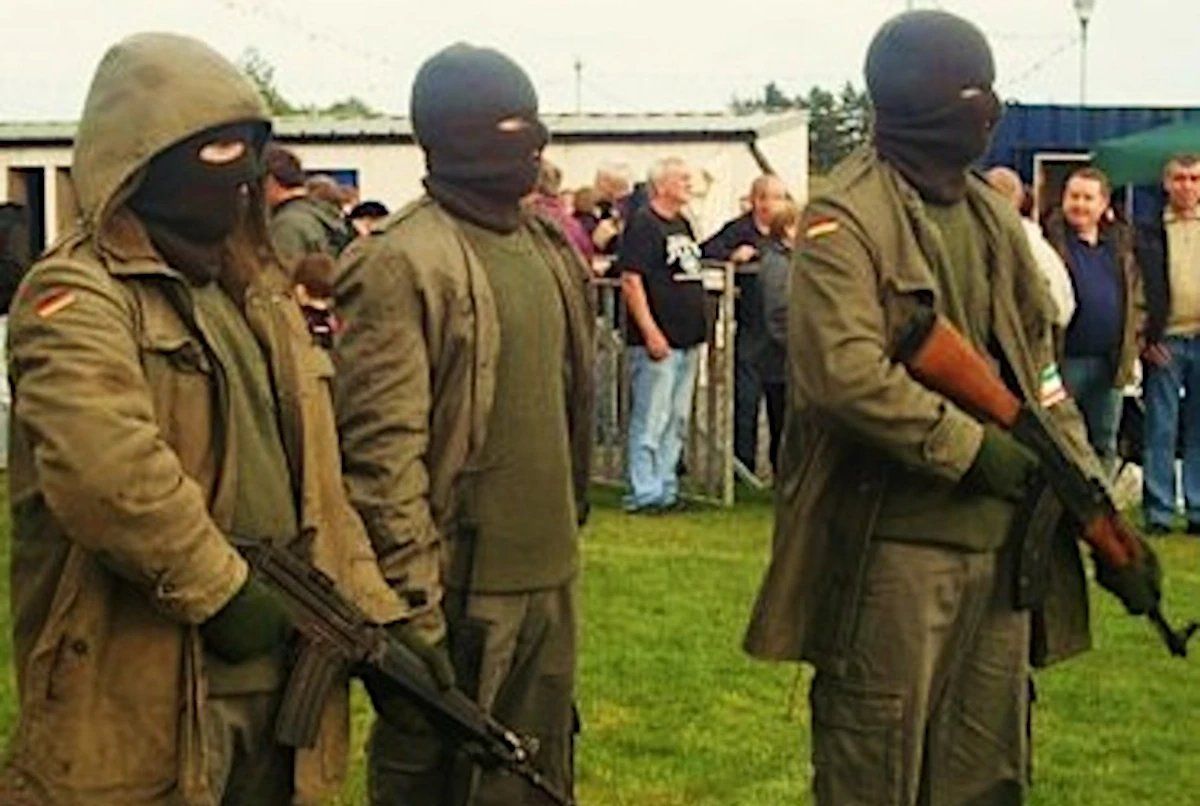
Police pointed to "very many similarities" with the failed attack on the police station in Lurgan on 30 March 2026, for which the New IRA (New Irish Republican Army) claimed responsibility. The New IRA is not an entirely new phenomenon, but rather an evolution of the long tradition of armed Irish republicanism. It emerged in July 2012 from the merger of the Real IRA (which, among other things, carried out the Omagh bombing in 1998, killing 29 people) with the group Republican Action Against Drugs (RAAD) and other minor dissident factions. The organisation rejected the Provisional IRA's 2005 ceasefire and the Good Friday Agreement of 10 April 1998. That famous accord brought an end to three decades of the so-called "Troubles", in which more than 3,500 people died. For the New IRA, the Good Friday Agreement is a betrayal. The group's ideology remains unwaveringly radical. Its goal is a united, socialist Irish republic achieved by armed means, the elimination of the "British occupation" and the complete rejection of the Stormont institutions. The members of the New IRA number from several dozen to several hundred active members, recruited mainly from the Catholic districts of Belfast, Derry and the border counties, where a sense of economic and cultural exclusion still feeds the nostalgic myth of the "unfinished revolution" of 1916.
In 2019, the group admitted to the accidental shooting of journalist Lyra McKee during riots in Derry – an incident that shocked the public and showed just how random death can be at the hands of a "people's war". In 2023, the New IRA was responsible for the shooting of detective John Caldwell in Omagh. It was an attack aimed at paralysing the PSNI's counter-terrorism structures. Attacks on police officers, prison guards and security infrastructure form the core of its strategy. The aim is precision strikes against British targets, intended to destabilise the everyday functioning of Northern Ireland. Experts at MI5 and the PSNI classify the threat posed by the New IRA at the "substantial" level – that is, high, though not critical. The New IRA is the largest and most active of the four main dissident groups (alongside the Continuity IRA, Óglaigh na hÉireann and Arm na Poblachta), possesses the technical expertise to construct attacks and draws on networks of support within republican communities.
The United Kingdom's exit from the European Union in 2020 created a de facto trade border in the Irish Sea, which unionists saw as a betrayal and republicans as an opportunity to accelerate unification with Ireland. Added to this are the demographic changes in the region, as Catholics now make up almost half of the population, and Sinn Féin (a party once regarded as the political wing of the IRA – editor's note) even won the 2022 Assembly elections, which stirs genuine hopes among radicals for a unification referendum. The New IRA exploits this dynamic, and in its New Year's statement for 2026 it called for "continuing resistance to the occupation".
The New IRA operates within a society that has largely accepted peace and the political status quo. Polls even show that more than 70% of Northern Ireland's residents do not want a return to violence and terrorism. The only support comes from marginalised social niches, as the majority of the republican community backs Sinn Féin and its democratic and peaceful political path. However, amid economic exclusion, high unemployment in Catholic districts and housing problems, the New IRA finds recruits among young men.
Political reactions to the Dunmurry attack were unequivocal, with First Minister Michelle O'Neill (Sinn Féin) stating that the perpetrators "do not speak for absolutely anyone in Northern Ireland". DUP leader Gavin Robinson called for the full force of the law to be applied. Prime Minister Keir Starmer condemned the attack and pledged that those responsible would be brought to justice. Police Federation chairman Liam Kelly called the perpetrators "cowards from a dark age". These statements underscore the consensus among political and social elites that the New IRA is an anachronism, a relic of history that has no place in modern Ireland.
According to experts, the New IRA does not pose a real threat to the stability of Northern Ireland. The group is too small to mount a campaign on the scale of the 1970s or 1980s. Yet from a symbolic and psychological perspective its activity matters, as it undermines the narrative of peace and hampers the normalisation of relations between the Catholic and Protestant communities.