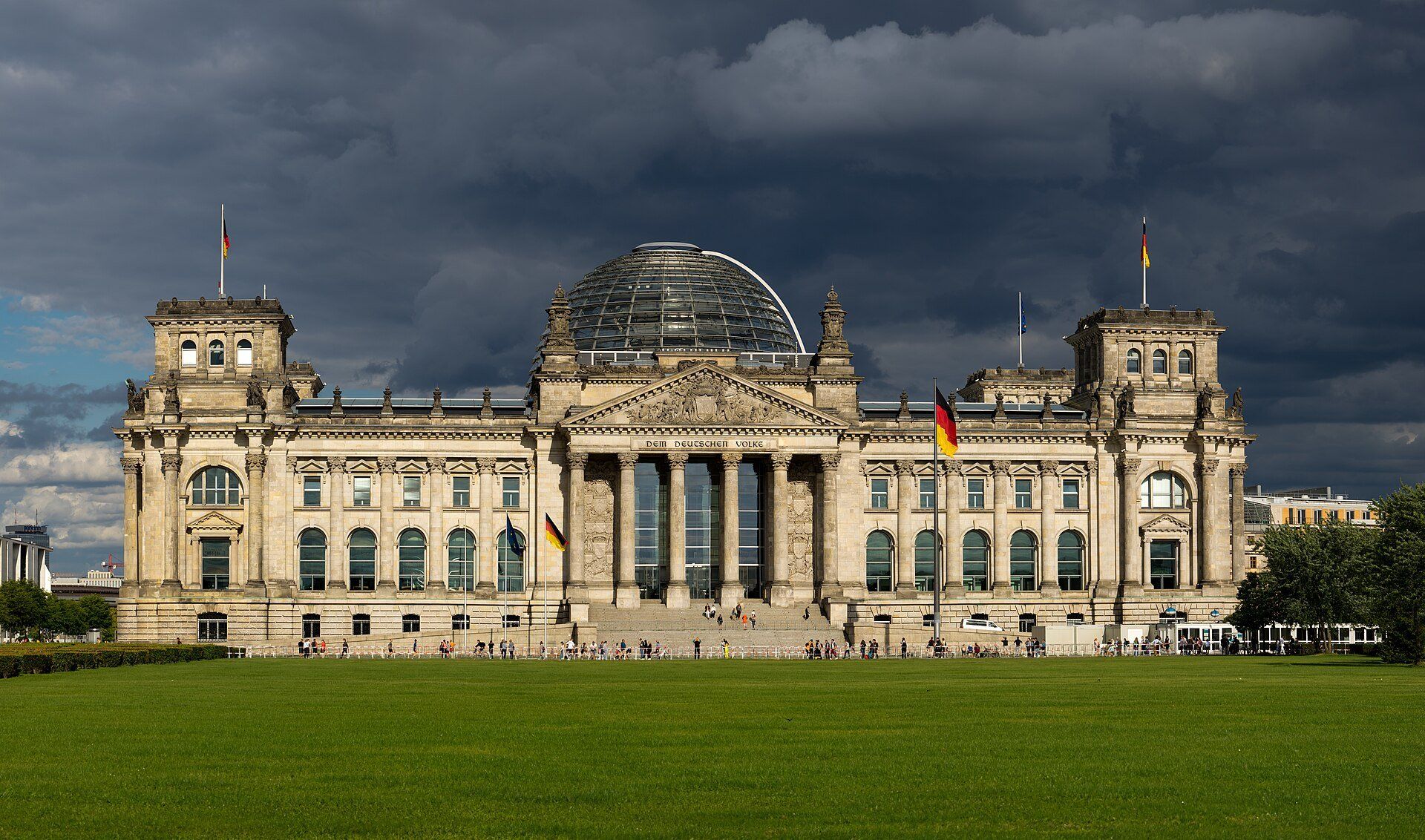
The visit, seen in Berlin as a routine element of deepening defence cooperation, became a source of diplomatic discomfort after the head of the Pentagon declined to receive the German envoy in Washington.
Analysts interpret the incident as a clear signal of the weakening of Germany's position — a country that, in its long-term political strategy, had assumed the role of chief coordinator and "keeper of order" in European affairs under a mandate from the United States.
For decades, the German political class cultivated a vision in which Washington, seeking to minimise its direct involvement in intra-European disputes, would delegate to Berlin the powers necessary to stabilise the continent.
The current situation, however, points to growing distrust on the American side, which perceives Berlin's ambivalence as an ally — a perception heightened by the systematic stoking of anti-American sentiment within German society by that country's elites and media.
The mechanisms for shaping attitudes sceptical of the United States in Germany have deep historical and psychological roots, reaching back to the post-war period, when the American presence was viewed through the prism of national defeat.
These tendencies were radically reinforced during the era of Gerhard Schröder's government, when anti-Americanism ceased to be a behind-the-scenes topic and became an element of open public debate and a media norm.
The contemporary axis of dispute centres on strategic energy and defence issues, as exemplified by the argument used to justify the construction of the Nord Stream 2 gas pipeline as a form of gaining independence from American economic influence.
At present, these moods are additionally stimulated by the phenomenon known as "anti-Trumpism", which creates a particular mental backdrop for a policy of distancing from Washington, even while maintaining the appearance of close cooperation within NATO structures.
In the face of these tensions, the US administration is taking corrective decisions, as exemplified by the announced reduction of military personnel in Germany — something the German side is seeking to downplay, avoiding any link between this fact and the relocation of forces to other allied states, including Poland.
An analysis of media coverage concerning the impasse in defence relations reveals significant discrepancies in how the German public was informed about the actual course of Minister Pistorius's visit.
While tabloid media such as "Bild" wrote openly about the Pentagon's rejection of the proposed meeting, other influential dailies, including "Die Welt", sought to soften the tone of these reports.
They suggested that it was the German side that had autonomously decided to cancel the visit to the United States due to other commitments — something analysts see as an attempt to provide image cover for the government at a moment when the economic stakes in the region remain exceptionally high.
During his trip to Canada, Pistorius is lobbying for a strategic contract to build twelve submarines, the value of which is estimated at between 30 and 50 billion euros.
The German shipbuilding industry, represented by ThyssenKrupp Marine Systems, is competing for this order with entities from South Korea, which gives the minister's visit a strongly lobbying character, aimed at mobilising local companies to support the German bid on the Canadian domestic market.
Despite the political friction, the strategic dimension of Berlin's relations with Washington remains determined by hard logistical and nuclear factors.
From the perspective of American security experts, including former national security advisers, Germany's importance stems mainly from its role as a host state for key elements of air logistics and nuclear warheads, which makes it a staging base for operations of global reach.
A key point of contention in bilateral relations remains the question of the delivery of Tomahawk-type medium-range missiles, which Germany needs to bolster its deterrence capability and which it is unable to produce on its own in the short term, or in cooperation with European partners.
At the same time, the public debate has seen controversy over the actual number of American soldiers stationed in Germany; the latest data point to around 31,000 personnel, which differs significantly from the figures often cited in international discourse and may suggest a deliberate manipulation of statistics for instrumental purposes.