Donald Trump summed it up with disarming candor. The Jews and the Persians have been fighting – as he put it – either for forty-seven years, or for three thousand, however you care to count. And he added the most important thing: if he closes his deal with Iran, Netanyahu will have no choice and will have to stop shooting. The whole situation is a little funny and a little frightening, because behind it all stands a human tragedy. So let us try to lay it out calmly, because it is happening within a quadrangle, or rather a pentagon, which first has to be drawn.
The pentagon, or who is with whom and over what.
On one side we have Israel, on the other Iran, between them Lebanon, over it all the United States, and beside Lebanon Hezbollah must be placed separately – a pro-Iranian militia that is the largest armed force operating in that country. Israel is hammering Hezbollah for all it is worth, trying to weaken it as much as possible, not to destroy it. Because Hezbollah simply cannot be destroyed. It has been attempted many times already, across whole decades, and it has never succeeded. Its command can be smashed, one column can be wiped out, a second, a fifth, but Hezbollah itself cannot be torn out, because it is grown into the social fabric of Lebanon's Shiites in an entirely natural way.
Hezbollah cannot be killed, and here is why.
Let me give an example that explains everything. There is a poor Shiite who dreams of finally getting married and starting a family. There is a Shiite woman too, and even the families agree, there is only no money. So they go to Hezbollah, and Hezbollah says: we will bless your union and build you a house, on two conditions. First, you will never enter your own cellar, to which there will be a separate entrance. Second, when sons are born to you, you will give them to our center, and we will take care of them from then on. No one orders them into the boots – after a few years they will want to themselves. And next door Hezbollah will set up a health center, take the two nearest street corners under its care, and so on. That is precisely what being grown into the nation means. You cannot bomb that away.
Lebanon tries to change the rules.
And here something new begins. Lebanon's Prime Minister Nawaf Salam has had enough of a situation in which he formally rules the state, while in fact its Shiite part is ruled by Hezbollah. So he hit upon the idea of revolutionizing the country's entire security system: to disarm Hezbollah, strip it of its monopoly on violence, and buy security elsewhere – by forging an alliance with America. At the beginning of March 2026 Salam banned all armed activity by Hezbollah, and a previously adopted plan of gradual disarmament entered its first phase. Washington threw in two hundred million dollars for the Lebanese army and its envoy, who is pressing Beirut to disarm while there is still time. It would all look beautiful, were it not for one fact: Hezbollah is the armed arm of Iran, and Iran will not allow that arm simply to be cut off.
Escalation in twenty-four hours.
And that is why Israel decided to help Lebanon's prime minister a little, hammering Hezbollah ever harder. On Sunday it struck the southern suburbs of Beirut. Iran, seeing that its people were already taking more than their share, decided to pull on the reins and from Sunday night into Monday sent several dozen ballistic missiles toward Israel – the first such direct attack since the spring truce. Israel, despite Trump's explicit request, struck back, and in two waves deep into Iran, hitting anti-aircraft defenses and a petrochemical plant. It must be said honestly that this exchange of blows, though mighty in its symbolism, passed almost without casualties – most of the missiles were intercepted or fell in open terrain. By evening both sides pulled back: Iran announced the end of its operation, and Netanyahu that he was halting strikes for now. And here Trump returns with a stance I really like. He tells journalists openly: we are one step from a deal with Iran, I don't want everything to blow up now, and it is I who deals the cards, not Netanyahu. I'm holding him to his word.
The price of oil will tell the truth.
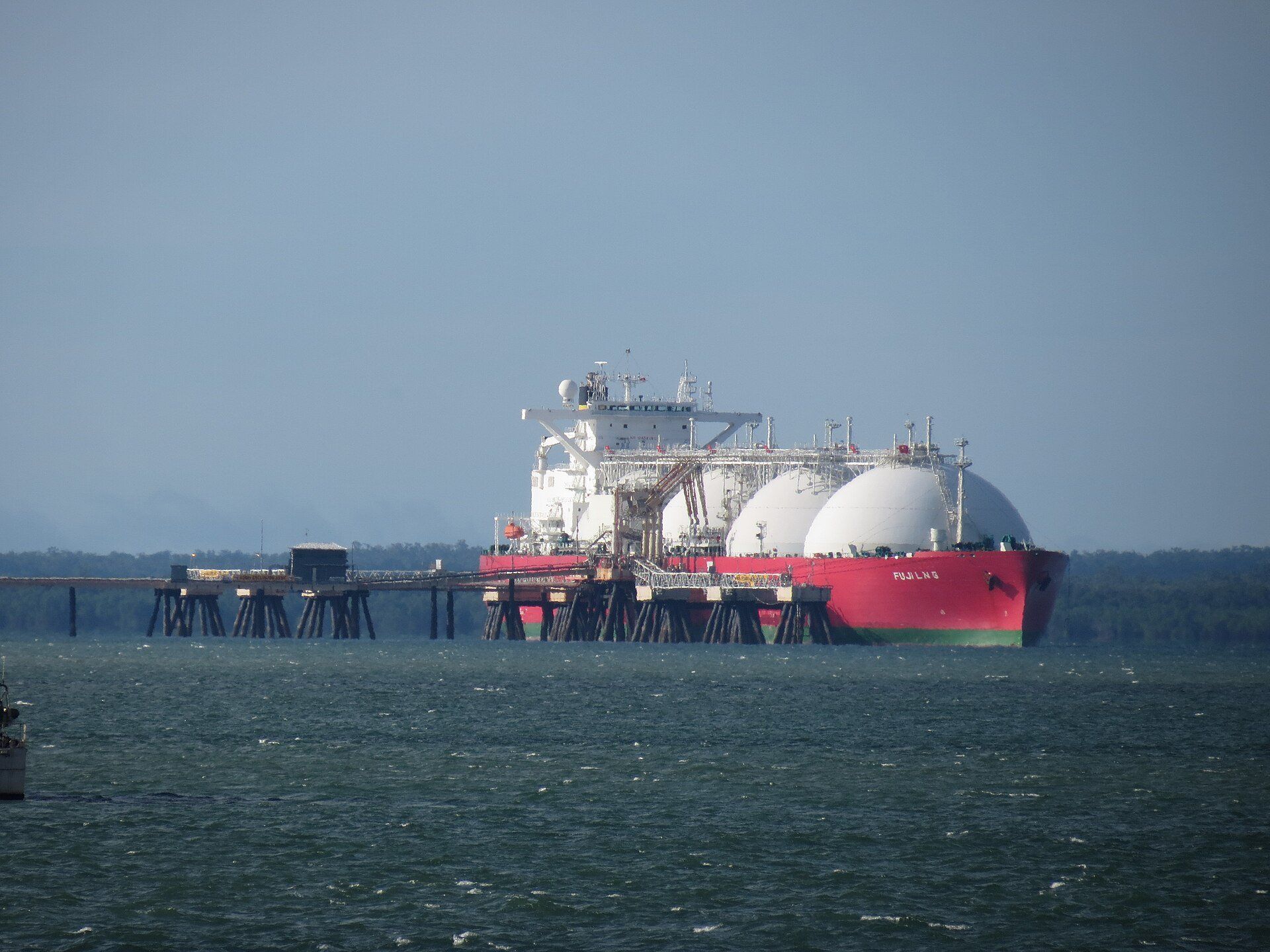
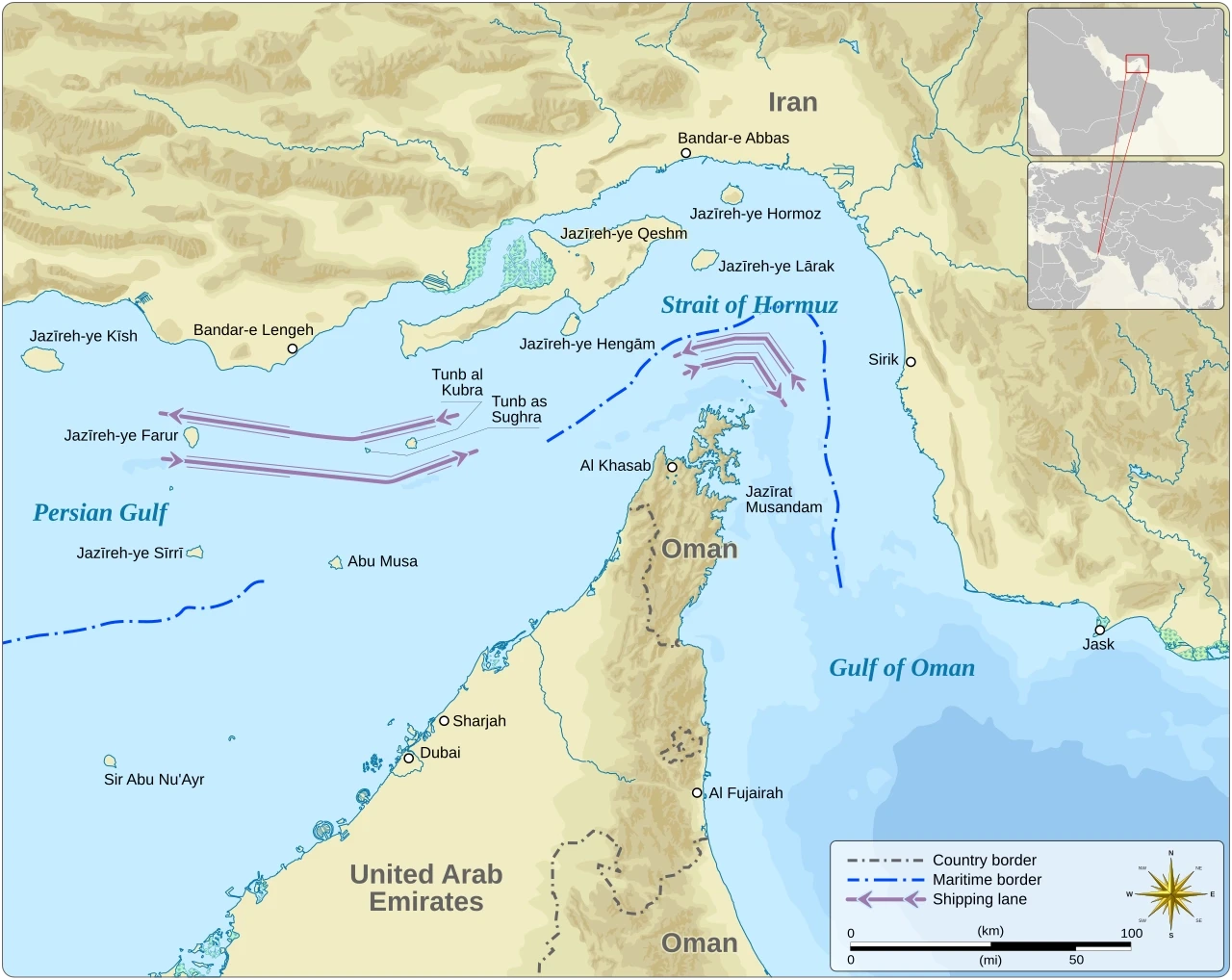
And now the most important thing, because this is my profession: how to read all of this without being swept up by panic. Well, after yesterday's attack oil jumped to around 97–98 dollars, only to fall back that same day to roughly ninety-three. That is not much. By way of comparison, during the spring phase of this war, when the fate of the Strait of Hormuz – through which about one fifth of the world's oil and roughly the same amount of liquefied gas flows – genuinely hung in the balance, a barrel of Brent reached one hundred twenty-six dollars. We have not even come close to those peaks today. What is more, ever since serious talks with Iran got under way, oil has fallen – May alone was the worst month for oil prices in years. The market, to put it plainly, does not believe in a long war.
And here a small lesson, so as not to panic at the sight of every jump in quotations. A high oil price by no means has to mean high prices at the pump. The historic record, about one hundred forty-seven dollars a barrel, was set in July 2008, and yet fuel prices were sometimes lower then than today – because the dollar exchange rate was different, and above all refining margins were different. Today a refinery earns on the order of a dozen-odd or twenty dollars a barrel, whereas in the lean years it was a few. Over the last dozen or so years several dozen refineries have been closed in Europe, which has driven that margin up further still. That is why we should not look at the price of oil itself today, but at how much the market demands to be paid for it in the December contracts. That is the most honest barometer of what money really thinks about the brevity of this war.
The barometer does not lie.
Because money has no emotions. A politician will step up to the camera and say whatever suits him, a general will show a map, and the newspapers will sell fear – but the quotation of the December barrel does not lie and does not give in to panic. If someone really wants to know whether this pentagon will collapse into a great war, or once again descend into the partisan squabbles of local powers, let him listen less to the commentators and glance more often at the oil price curve. Even today, without a shadow of emotion, it is pricing in what still awaits us.
I draw the factual material from reports by Reuters and AP as well as Al Jazeera and the Times of Israel from June 7 and 8, 2026, about the Israeli strike on Beirut, the Iranian missile barrage and the Israeli response, from Trading Economics and CNBC data on Brent oil quotations at the turn of May and June 2026, from materials of the American agency EIA on the significance of the Strait of Hormuz, from accounts of the Hezbollah disarmament plan and the position of Prime Minister Nawaf Salam, and from historical data about the peak in oil prices from July 2008. The conclusions are mine alone.