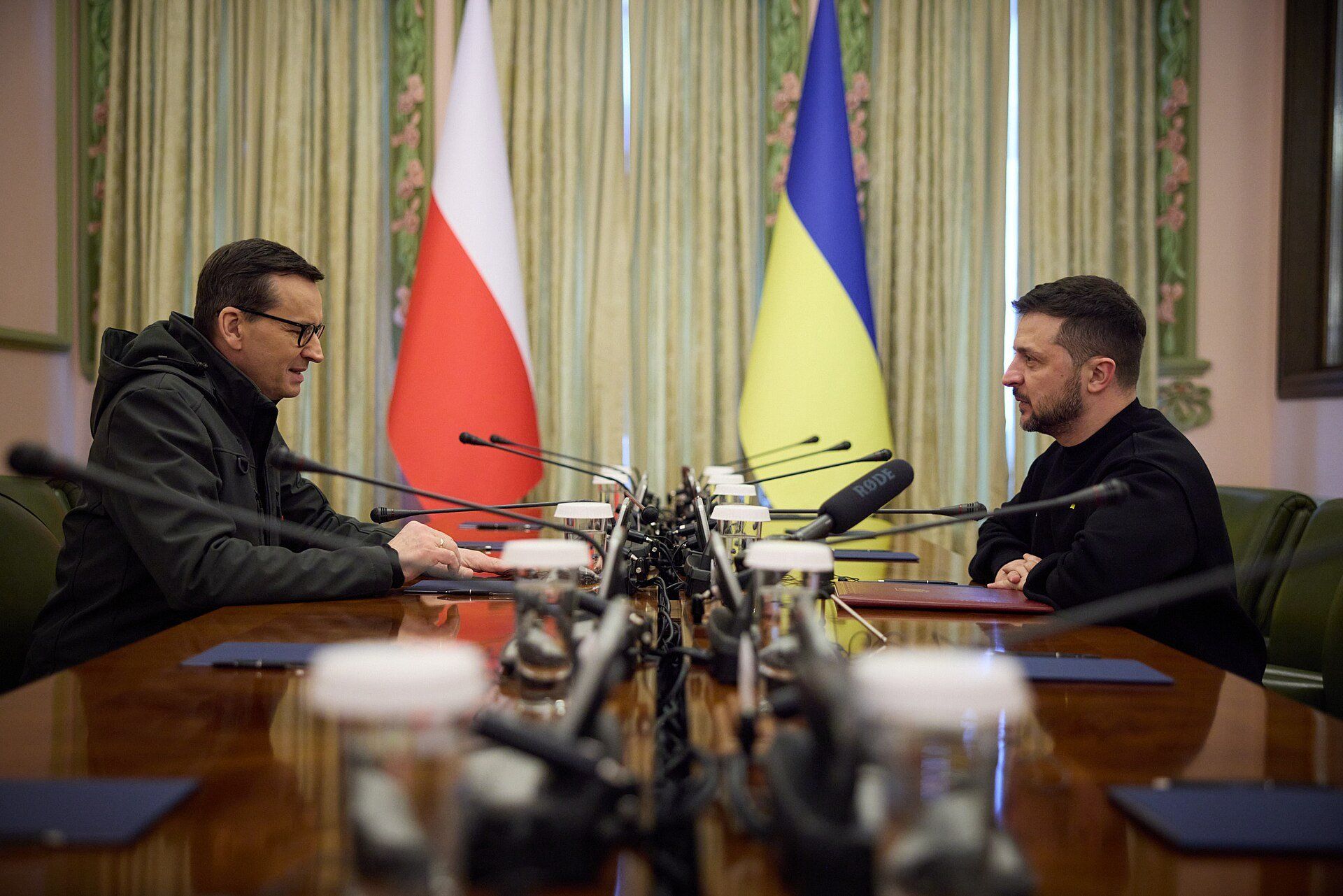
In London the trio met again. Poland was not at the table. On June 7 Starmer, Macron, and Merz met with Zelensky to set the terms of a “just peace” for Ukraine – a state whose fate hangs in the balance just beyond our border and which, without Polish territory, would not receive a single shell. And Zelensky himself flew to this summit not through Rzeszów, as usual, but by a roundabout route, through Chișinău in Moldova, demonstratively bypassing Poland in retaliation for our reaction to the UPA affair. These are two snapshots from a single week that add up to an uncomfortable thesis: the future of our part of Europe is once again being discussed over our heads.
The trio decides, Poland listens.
The format is constant and is called the E3 – the United Kingdom, France, Germany. It is they who, once in Geneva in the autumn of 2025, once in London now, sit down with the Ukrainians and sketch out the terms of peace – in London they set five of them, from an immediate truce to talks along the current front line. And there is a bitter paradox in this: it is through Poland, through the airport in Rzeszów, that the lion's share of Western aid for Ukraine flows, and yet at the table where the decisions are made, we are simply not present. The Italians at least had the courage to note their absence. Poland does not have even that much. When at another European summit the public question was raised, “and where is Italy, and where is Poland?” silence fell over the table, along with the faces of startled fish. Because that is exactly what our vaunted “European partnership” looks like: there are the equal and the more equal, and then it is called a community. The Italians feel wronged. What surprises me most is that we do not feel wronged.
A quiet chill between Kyiv and Berlin.
And beneath the surface something is happening that is talked about far too little in Poland: Ukrainian-German relations have in recent weeks been ever more heavily nuanced, not to say cooled. Chancellor Merz recently came out with the idea of “associate membership” for Ukraine in the Union – without voting rights – which Zelensky publicly rejected as unjust. The Taurus cruise missiles promised to Ukraine were being withheld and are withheld to this day – Merz, who demanded them while in opposition, declared once in power that he “sees no point.” In the German public debate, voices of war-weariness are also growing ever louder; even serious titles, like the Frankfurter Allgemeine Zeitung, publish essays arguing that Ukraine positively has an obligation to sit down to peace talks. Each of these signals taken separately can be explained. Together they begin to form a pattern.
The specter of Mitteleuropa.
And here I must honestly separate the fact from my apprehension. At the governmental level Berlin is today harder, not softer, toward Russia than it was under Scholz, and German-Russian trade has practically collapsed. But in my view it is worth watching the trend closely, not just the current state. Because the pressure to return to business with Moscow is growing and flows today mainly from the opposition: at the forum in St. Petersburg a delegation of the Alternative for Germany appeared, whose representative met with the head of Gazprom and called for the reactivation of Nord Stream. In Russia itself about fifteen hundred German companies still operate. All this reopens the old books about German-Russian rapprochements and about Mitteleuropa – a concept of a German sphere of influence over the countries lying between Berlin and Moscow, devised back in Bismarck's time. I find it hard to shake the impression that if war-weariness in Germany keeps mounting, it is precisely we, lying “in between,” who would again have to pay the bill for someone else's peace. The symbol of this risk is Nord Stream. The pipelines lie dead today, and a German investigation points to a Ukrainian team of divers being behind the 2022 sabotage – but in the shadow of the peace talks the very question of their reactivation has returned to the German debate. Berlin officially denies that it wants to go back to Russian gas. I, however, take such denials at their word only when they are followed by deeds.
The Intermarium, or our answer.
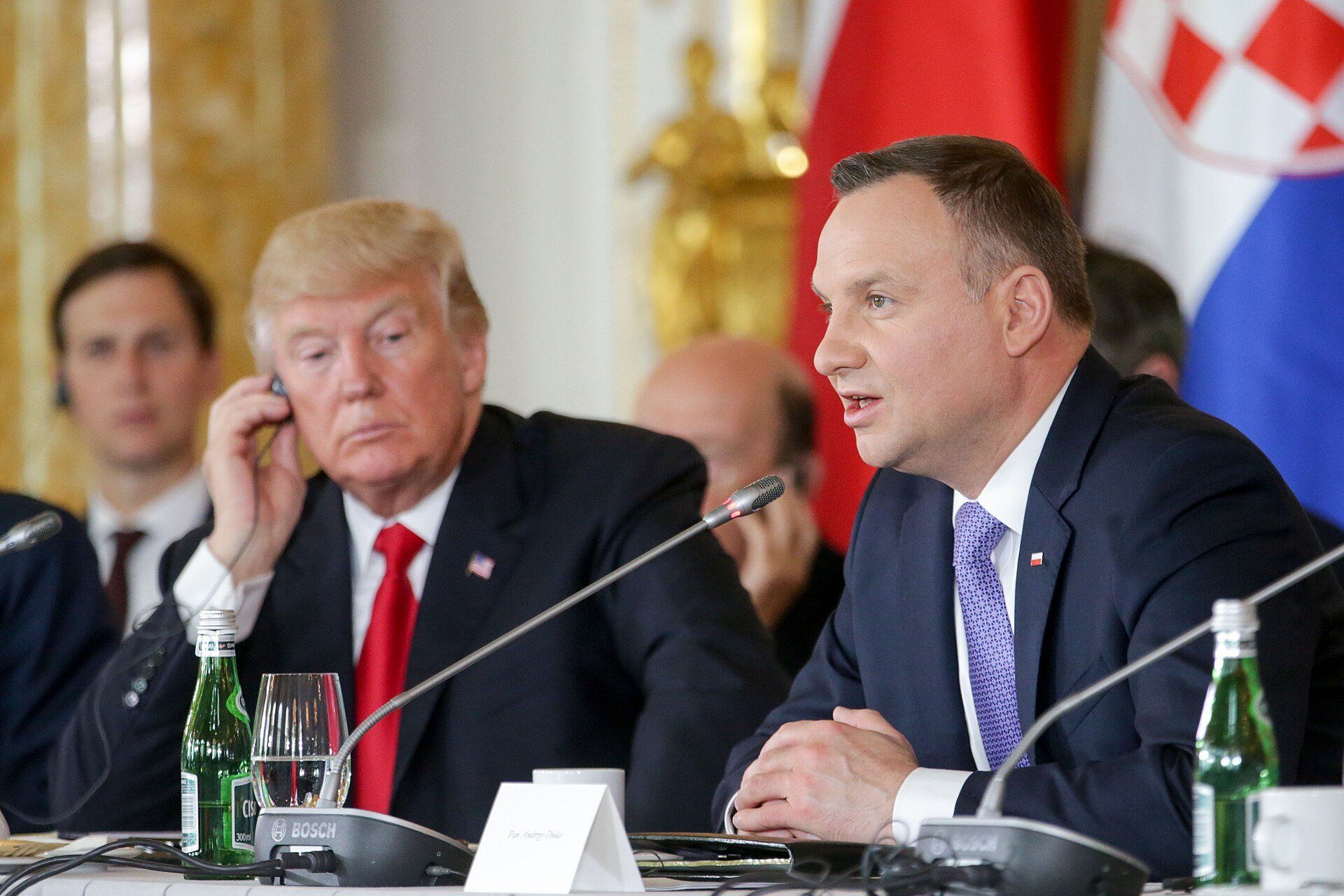
What to do about it? The answer is as old as independent Poland and is called the Intermarium. Its living, working incarnation today is the Three Seas Initiative, which brings together thirteen states of our region, from the Baltic to the Adriatic, and Ukraine itself has been a partner state in it since 2022. What is more, it has a real ally across the ocean: Donald Trump was the first American president to attend a Three Seas summit, and his administration supports this project in energy and economic terms. This is our natural axis – Poland, Ukraine, Romania, the Baltic states, the whole Central European ribbon. Ukrainian strategists themselves are beginning to say that only such a bloc, stretching from the Baltic to the Black Sea, gives our part of the continent real agency. At the April summit in Dubrovnik the United States and the states of the region signed agreements on cooperation in nuclear energy and on a southern gas corridor – this is no longer a slogan from a history textbook, it is hard infrastructure. This is the direction in which this project must be expanded, until from an economic platform it becomes a security community.
A subject, not an object.
Only – and this is the key – in all of this we must have both at once. On the one hand, to set Kyiv our own firm conditions on matters that are sacred to us – like the memory of Volhynia. On the other, not to let the prospect be torn from our heads that only together, Poland, Ukraine, Romania, Slovakia, can we resist the crushing weight that Western Europe, together with Russia, is trying to stretch over us. Because the alternative to the Intermarium is not comfortable neutrality. The alternative is the role of that land “in between,” which others are again discussing – in London, in Berlin, in Moscow – but which no one invites to the table at all. And that is why the matter is, for once, simple: either we build our own bloc and become a subject, or we remain someone else's object forever. For a state lying where we lie, history provides no third way.
The facts in this text come from the joint statement of the leaders of the E3 format from London on June 7, 2026, from reports by the Kyiv Post, the Kyiv Independent, Euronews and Politico from May and June 2026 about President Zelensky's flight through Chișinău, about the “associate membership” proposal and about the matter of the Taurus missiles, from data of the German statistical office Destatis on the collapse of trade with Russia, from accounts of the presence of an AfD delegation at the forum in St. Petersburg, and from materials about the Three Seas Initiative, its members and American support for it. The political conclusions are my own.