The nation has a right to anger. Those in power – do not. This is a distinction we have completely forgotten in recent days, and yet everything begins with it. We, the citizens, may and do have the right to be guided by emotions, by stereotypes, by the impulse of the heart. But that is precisely why a nation has elites and has a state, so that they – unlike us – are not guided by emotions for even a moment, but by the cold reckoning of the good of the nation they lead. That is why I want to break today's wave of justified anger at Kyiv into two things that are constantly confused: what we are allowed to feel, and what the state must calculate.
The Chapter and the anger, or the first time we say “no.”
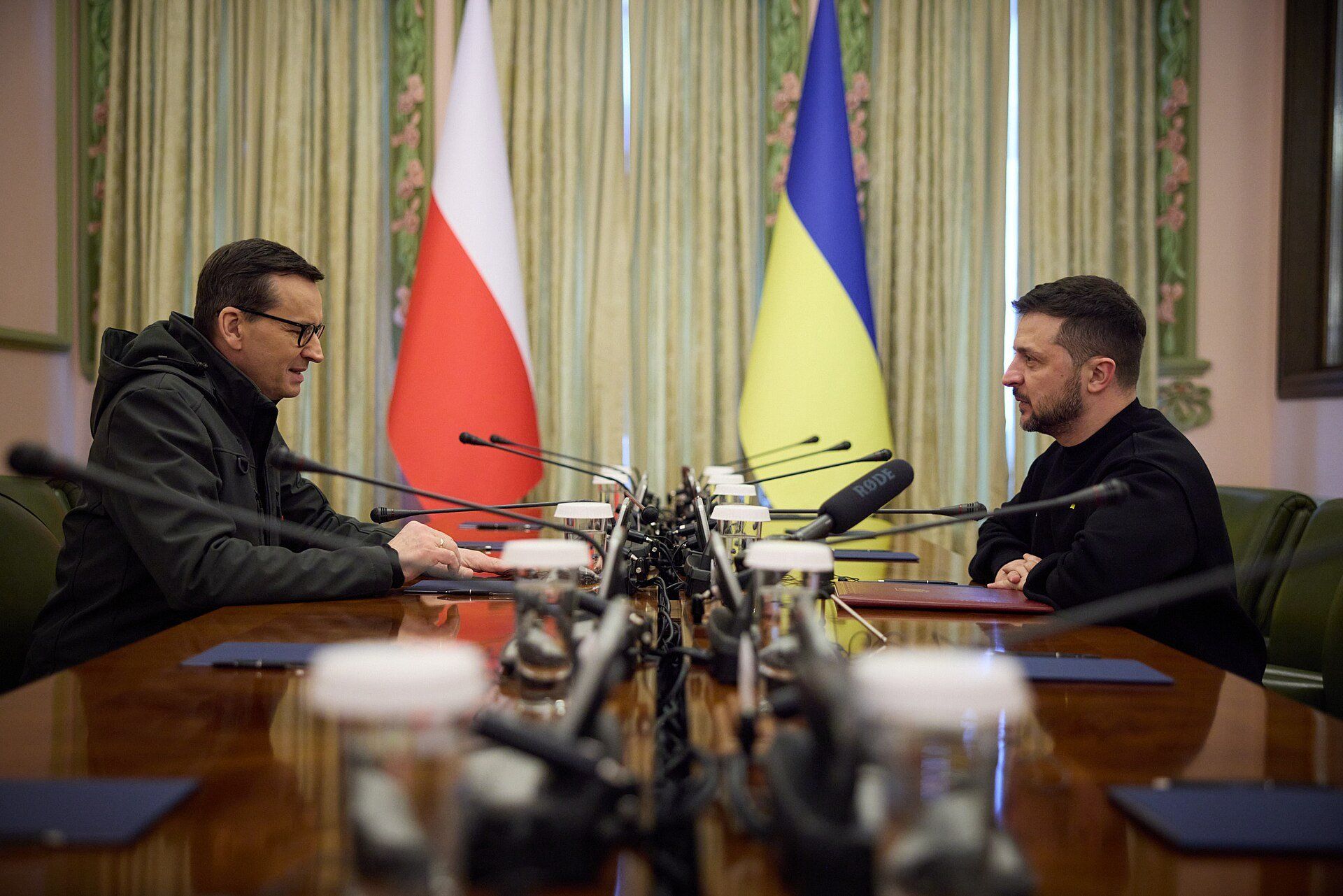
The background is known. After President Zelensky bestowed on an elite unit of the Ukrainian special forces an honorary name referring to the Heroes of the UPA – the very formation that the Polish Sejm, by its resolution of July 22, 2016, recognized as guilty of genocide against Poles – a genuine wave of fury swelled in Poland. On Monday, June 8, the Chapter of the Order of the White Eagle convened and presented President Nawrocki with its opinion on the matter of stripping Zelensky of the decoration. And here at once an important point that is forgotten in the heat of the moment: the Chapter did not reveal its opinion, and the president himself announced that he would make the decision “in due course.” The Order formally still stands. Nothing has yet been settled, and anyone who writes that it has already been revoked is getting ahead of the facts.
It is worth remembering, too, what an exceptional moment this is. In over three hundred years the Order of the White Eagle has been revoked in its entire history only once – from Wincenty Witos in 1932, by court verdict. Poland almost never does this. And if we are discussing it at all today, it means that after years of silence we are for the first time saying a firm “non possumus” to Kyiv. Perhaps to them it is unimportant, but to us it is very important, and either they will take it into account, or we will go on being angry – to the detriment of both nations.
The Corvette at Morskie Oko, or the mirror.
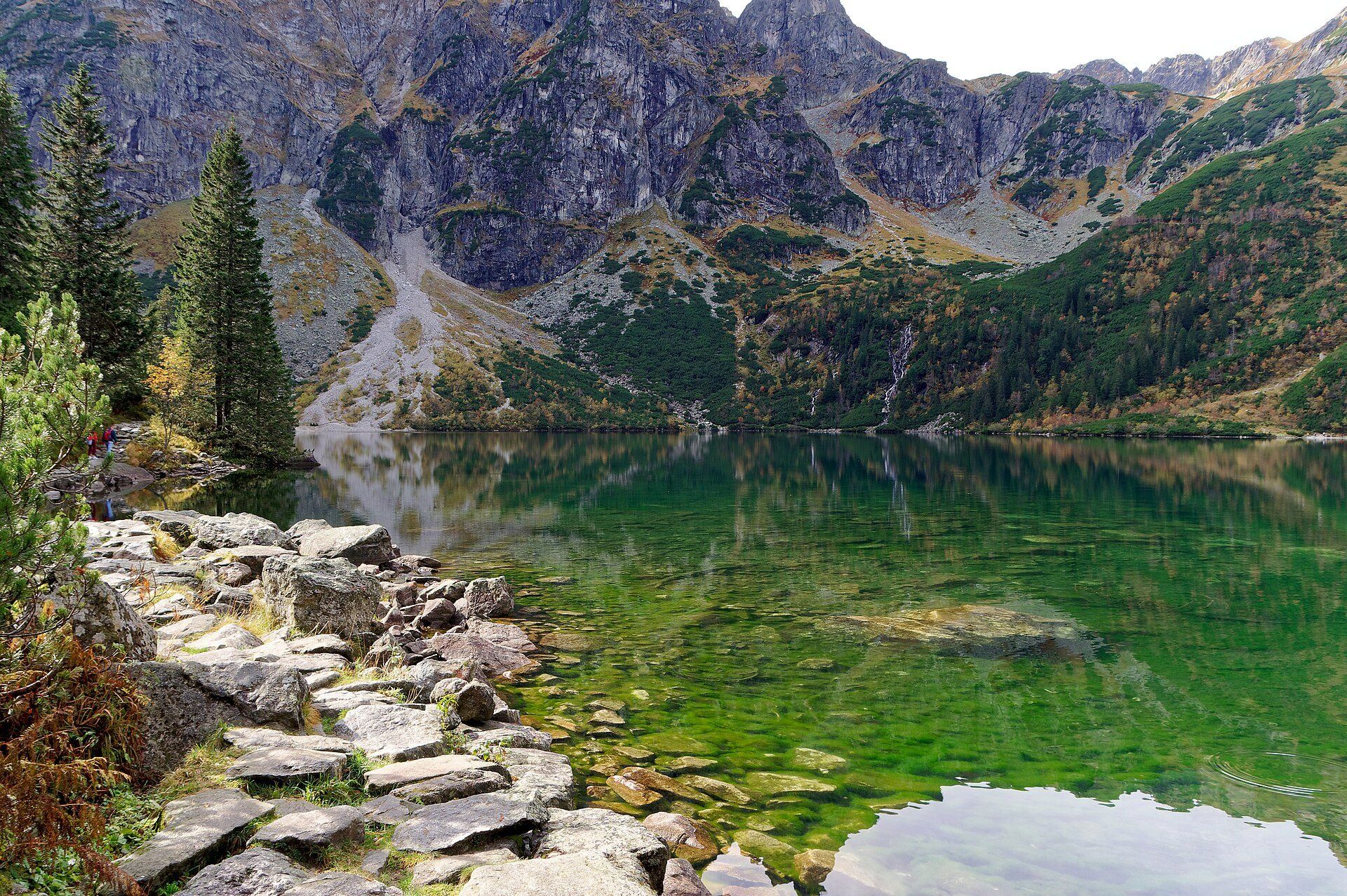
Around the middle of May a certain Ukrainian drove a Chevrolet Corvette sports car right up to Morskie Oko itself, breaking everything that is sacred to us around the Tatras. I will admit frankly: when I heard that he received not only a fine but also a ban on entering the Schengen zone, I felt satisfaction. Serves him right, I thought. And then, on Twitter, I collided with an argument that forced me to stand before the mirror. It went like this: and if a Pole had driven up to Morskie Oko, how would it have ended? It would have ended with a fine. The fine for the drive itself was, moreover, scandalously low, a mere one hundred zlotys. What really struck this man was the five-year ban on entering Europe – and not because he had done something worse than a Pole, but because he did it precisely now, at this particular moment and no other.
And this is exactly the heart of it. We, as a nation, have the right to this emotion. But a state that metes out a five-year entry ban to someone for an offense worth a hundred zlotys, because the mood happened to carry it away, behaves exactly as it should not. It irritates me all the more when I hear Prime Minister Tusk announcing that from now on, in relations with Kyiv, we will be guided not by empathy but by hard business. Mind you – a prime minister who until yesterday was guided by empathy. So where exactly are we? A state should never be guided by empathy. Empathy is for the nation. Cold reckoning is for the government – and if we are only discovering that reckoning today, it means that for years it was not being kept at all.
The exhumations, or the measure of our former passivity.
This is seen best in the matter that ought to burn us most – the memory of the victims of Volhynia. We are speaking of about one hundred thousand murdered Poles. I checked how much we have managed to do over all these years, and the answer is staggering. In 2017 Ukraine introduced a moratorium on Polish searches and exhumations. It was lifted only at the end of 2024, and the first work since then began in the spring of 2025 in the village of Puźniki. One village. Eighty years after the crime we have given a dignified burial to the victims of a fraction of one percent of the killing sites. This is not the fault of the war itself, even though I myself kept repeating that this is not the time for it. It is the measure of our own, years-long passivity – we consented to everything for so long that we accustomed Kyiv to the idea that with Poland one simply can.
That is why anger is not enough. Anger is not policy. Policy is to sit down with the state budget in hand, to determine how many exhumations a year would satisfy us and whether we can afford them, and then to demand it firmly – not to ask, to demand. We are an important state and we have the right to set such a condition. The rest is emotion, and emotion, as emotion does, rides a very skittish horse.
Hard business has to be done skillfully.
Because “hard business” is not a slogan from a tweet, it is a skill that we, as a state, have yet to learn. Look at corruption, around which an internal and at the same time an international game is being played in Ukraine. Already in 2023 the Americans made further aid conditional on the introduction of a professionally drafted anti-corruption program and the strengthening of the independent NABU bureau. That same bureau, at the end of November 2025, entered the office of the head of the president's chancellery, Andriy Yermak – Zelensky's closest associate – who resigned the same day in the largest wartime corruption scandal. Around the Ukrainian reconstruction, worth hundreds of billions, Western politicians are already circling today, preparing for the role of intermediaries and lobbyists once their terms in office end. This is a damnably difficult game, for which Polish firms and Polish services are mentally completely unprepared – and that has to be said outright, before we start losing it.
And at the same time that same Ukraine is investing billions of dollars here – in real estate, in factories, in things that will stay here for good. We are Kyiv's largest European trading partner. So we can either take offense forever, or finally count up where we are indispensable to Ukraine, and at precisely those points firmly set our own conditions. In military matters we help as we have done so far, by making available our airspace and territory. In all the rest we demand something concrete.
The best minority, or the other side of the ledger.
And there is one more thing we forget in our anger, and which cold reckoning commands us to put on the table. Nearly a million Ukrainian refugees with an active PESEL number now live in Poland, and among them more than three hundred thousand school-age children, covered since September 2024 by compulsory education. For all our fury, this is still the best national minority we can build for ourselves here, and a real chance to make up for our greatest problem, namely demographics. If these children are treated well here, they will stay, they will pay taxes and feed a system from which one day both we and our children will draw our pensions. This too must be remembered – just as one remembers the Polish heroes and the Polish victims of Volhynia.
Anger for the nation, reckoning for the state.
Because that is the whole art of governing – to be hard and at the same time wise when the nation is furious. Justified anger is fuel, but not a map. The map must be held by the state: to count where we are indispensable to Kyiv, to demand something concrete for it, and to remember its victims as scrupulously as its interests. So let the anger stay where it belongs – in the nation, which has every right to it. And let those in power finally start doing what they were appointed to do. With a cool head and in our name.
Here I reach for the resolution of the Sejm of the Republic of 22 July 2016 recognizing the Volhynia massacre as genocide, for the findings of the Institute of National Remembrance as to the number of victims, for reports by PAP, TVN24 and Rzeczpospolita from June 2026 about the deliberations of the Chapter of the Order of the White Eagle and about the prime minister's words, for UNHCR data on the number of Ukrainian refugees in Poland, for accounts by the Kyiv Independent, Euronews and the news agencies about the actions of the NABU bureau and the resignation of the head of the Ukrainian president's chancellery at the end of November 2025, and for information about the lifting of the exhumation moratorium and the work at Puźniki in 2025. The political judgements I take upon myself.