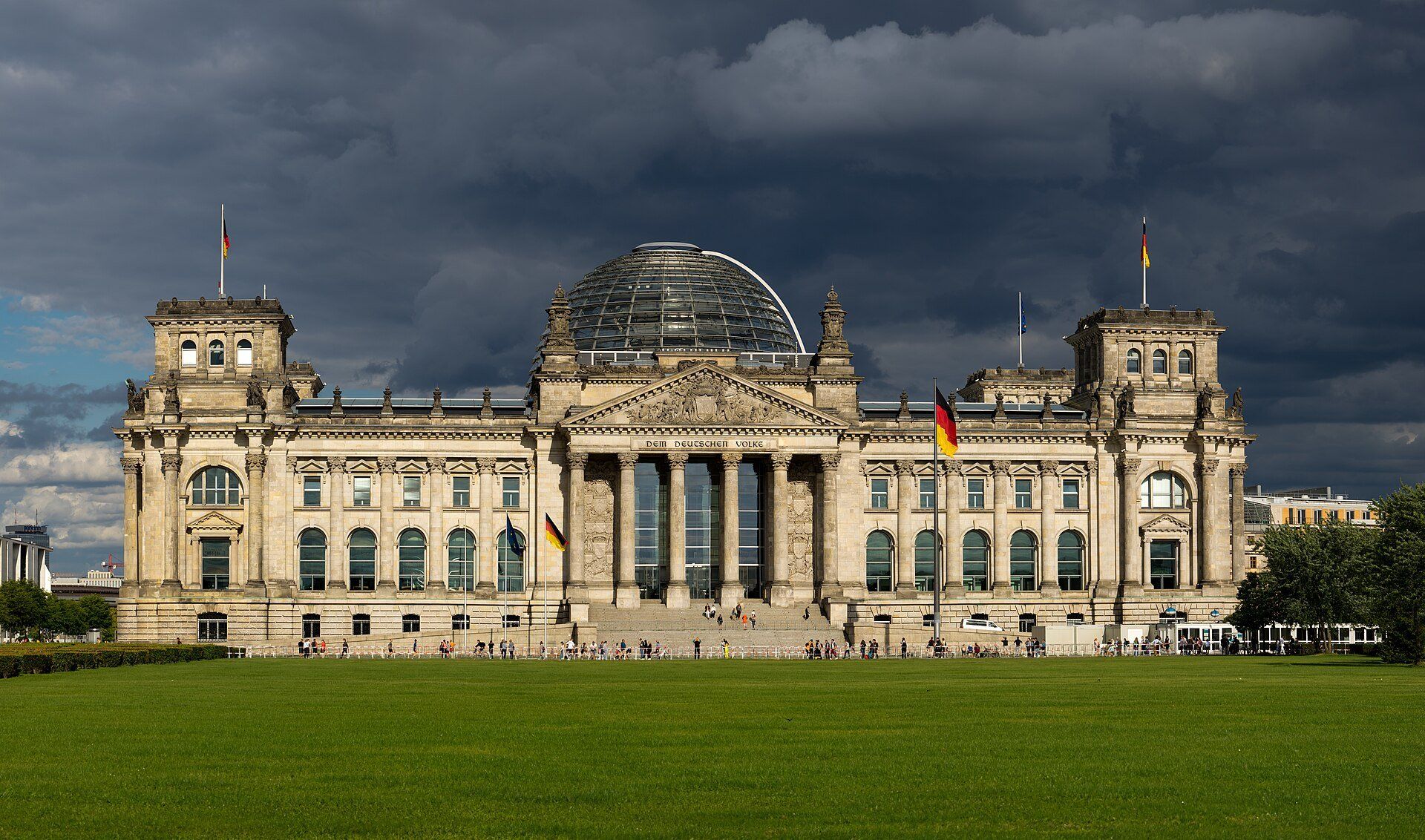
Contemporary German political culture is characterized by a deep discrepancy between the official narrative and actual actions. This mechanism allows Berlin to retain a broad room for manoeuvre, because truth and reality are treated purely instrumentally and subordinated to short-term political goals.
The most striking example of this phenomenon is German historical policy, which deliberately constructs an image of Germans as victims of anonymous "Nazis," thereby distancing themselves from responsibility for the events of the Second World War. This strategy, although effective so far in building an image on the international stage, carries the risk of completely detaching the political elite from reality. This leads to serious errors in assessing the situation and to a growing discrepancy between the form and the substance of the message.
Currently in Germany there is a clear loss of competence and quality resources within the political class, which makes it difficult to respond efficiently to abrupt shifts in geopolitical objectives. This situation is ruthlessly exposed by Washington, which — especially in periods of strong diplomatic pressure — openly points to Berlin's military and technological weakness, undermining its pretensions to leadership in Europe. American criticism focuses on the lack of real defence capabilities and the German economy's dependence on exports. Confronted with hard facts, this reduces German political declarations to mere empty slogans with no basis in reality.
Over the past decade, German policy has undergone a series of abrupt and inconsistent reversals, which drastically reduces the country's credibility as a stable partner. The most glaring example is the issue of migration — the shift from an open-door policy to the current tendency to introduce harsh restrictions and to send migrants back to neighbouring countries. A similarly radical evolution has taken place in the sphere of security, where many years of almost religious pacifism were suddenly replaced by announcements of building the largest conventional army in Europe.
A particularly dangerous element of German strategy is the recurring concept of a "third way," positioning Germany as an intermediary between the West and Russia and China. Such an approach, although presented as a striving for independence from the USA, has repeatedly benefited the eastern powers while at the same time generating enormous costs for the West in the broadest sense, including for Germany itself. The examples of catastrophic energy dependence on Russia or the current difficulties in economic relations with China show that ambitions to build an autonomous great-power position often end in strategic failures. The growing divergence between Berlin's ambitions and its real military and economic potential is destroying international trust and casting doubt on the effectiveness of the German model of leadership.