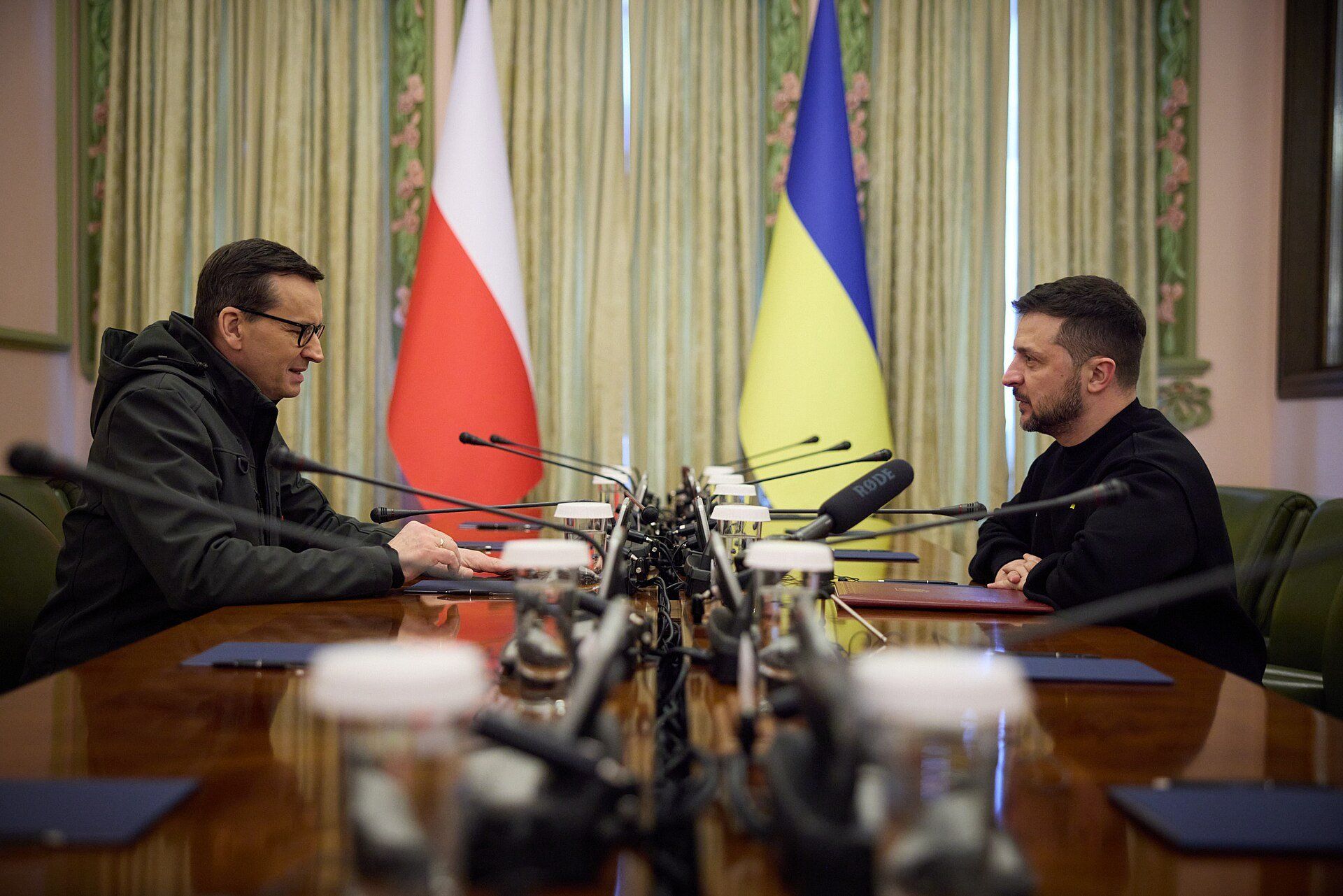
The Order of the White Eagle came back to Warsaw by post, in a parcel, with photographs taken at the post office. Ukraine's president returned Poland's highest decoration the way you return faulty goods to a courier. And it would be hard to find a better image of where Polish-Ukrainian relations stand today. Except I don't trust this scene. Because the louder the row over symbols grows, the more strongly I suspect it is meant to cover up something far more mundane: a dispute over aircraft (or something else), money and technology.
First, the facts, because a good deal of emotion has built up around them.
Let's start with the chronology, because it's easy to get lost in it. On May 26, President Zelensky conferred on one of the units of Ukraine's special forces an honorary name invoking the Heroes of the UPA, the very formation that the Polish Sejm, in a 2016 resolution, found guilty of the genocide of around a hundred thousand Poles. The Polish reaction escalated. On June 19, President Karol Nawrocki announced his decision to strip Zelensky of the Order of the White Eagle; the next day the Ukrainian leader returned the decoration by post, noting maliciously that the same order had once adorned Catherine II, Mussolini and Schröder. Following his lead, three former presidents of Ukraine, Kuchma, Yushchenko and Poroshenko, reached for their own decorations to renounce them too, and several senior officials, headed by intelligence chief Budanov, returned other Polish orders. An all-out war over medals.
A gesture left hanging on the signature of an opponent.
And now the catch that gets lost in all the noise. Poland's president can confer the Order of the White Eagle on his own, but to revoke it he needs something more: the prime minister's countersignature and publication in the "Monitor Polski." In other words: Nawrocki's grand gesture toward Zelensky does not take full effect until Donald Tusk puts his name to it. And there is nothing to suggest he intends to do so. Let's pause on this for a moment, because the situation looks like this: a president from one political camp stages a sovereign spectacle of tearing away a medal of honour, yet the legal completion of it lies in the hands of a prime minister from the opposing camp. Whatever this is, it is not one state speaking with one voice. It is two centres of power, each playing its own hand, and it is a good thing that in this case, though for entirely different reasons, this dispute over symbols suits each of them.
A suspicion that borders on a certainty.
I'll say something unpopular now and flag it upfront as a suspicion, not a verdict. I have a growing impression that the outrage itself was, at least in part, convenient for both of our camps. Not invented from scratch, because the UPA decree was real and genuinely offensive. But look at the timing and at the potential "usefulness" of Polish outrage. After all, this was not the first such Ukrainian provocation: orders, streets and plaques commemorating that criminal organisation have happened more than once, and we practically swallowed it. We took offence precisely now, loudly, at the presidential level, at exactly the moment when a far cooler dispute was coming to a head, one that stirs far less of the kind of righteous, public emotion. And a wave of righteous, symbolic anger is the one thing that binds together every side of our internal quarrel. The perfect cover. I'm not claiming someone staged this from the first scene to the last; I'm only saying that on our side no one was in any particular hurry to let that wave die down.
The hard dispute, fighter jets instead of sentiment.
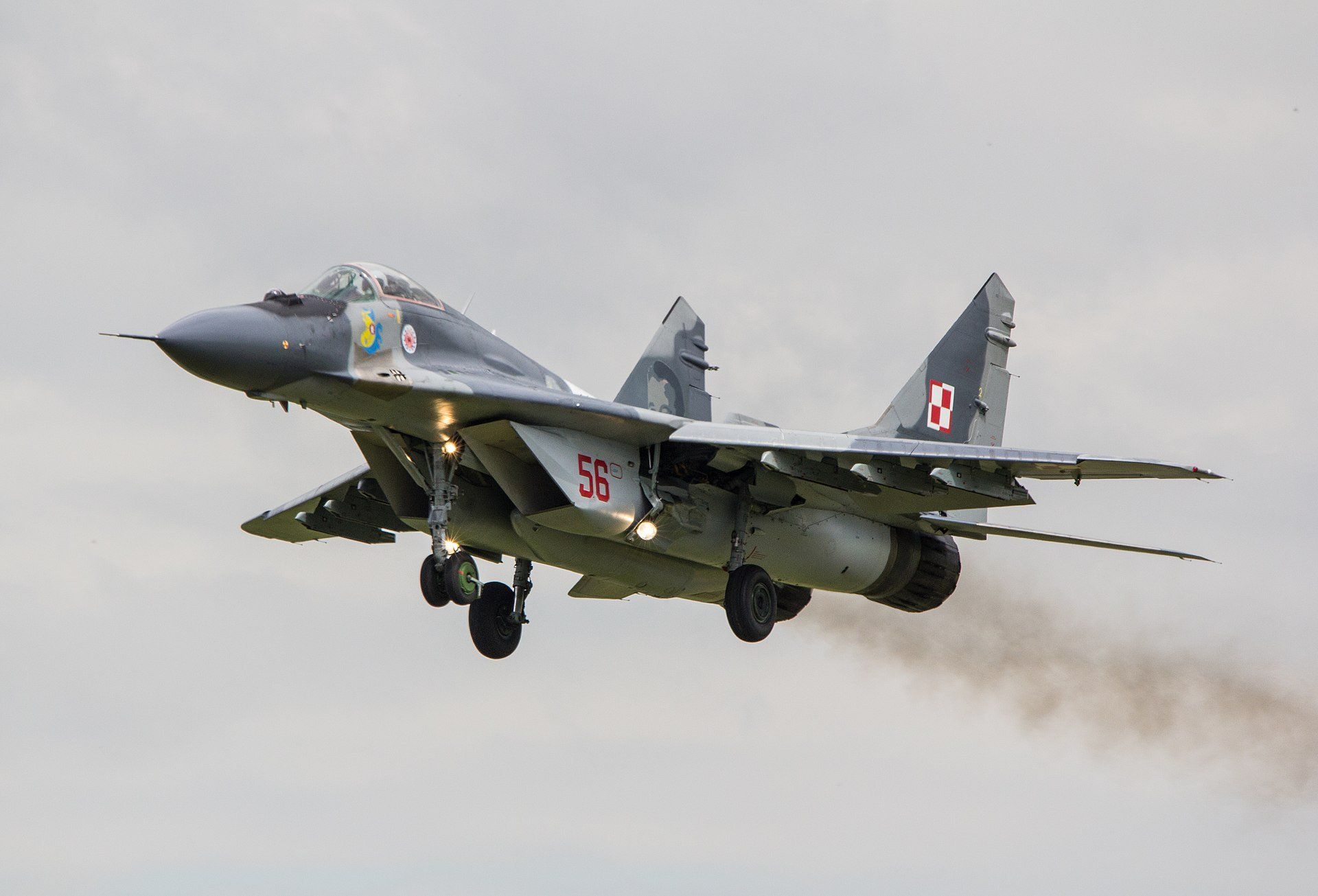
Because behind the medals a real negotiation is underway. Poland was to hand Ukraine its last fourteen MiG-29s. Kyiv's answer was, in essence, this: we won't take them as they are. Upgrade them first, add new avionics and systems. Warsaw's answer: we won't pay for the upgrade. Add to that the other half of the deal: in exchange for the fighters Poland was to receive Ukrainian drone technology, and in Warsaw's version Kyiv failed to deliver on it. And so everything stalled: no aircraft, and no drones. Meanwhile Ukraine has come to terms with Sweden over Gripens (first a dozen or so used machines, and in the longer run up to a hundred and fifty), kit that is newer, Western, and in no way entangled with us. This is the real state of that alliance, and it has nothing to do with wounded honour. It is a price that never closed.
Aid that became a transaction.
This is the change we still don't want to notice. Aid quietly, but long ago, turned into transactions. There is nothing scandalous in that: between states it is the norm, and to have expected otherwise was naive. We are still Ukraine's largest trading partner, with exports running well over a dozen billion dollars flowing east; the lion's share of Western aid passes through our territory; in Rzeszów stands a hub without which this war would look different. These are not gifts to be handed out in the name of brotherhood. They are cards. The mistake isn't that Kyiv plays transactionally; it's that we keep pretending we don't have to play that way. A returned medal makes a better impression than a blocked contract for fighter jets. But it is the contract, not the medal, that tells you where you really stand.
Let's look at this without resentment.
Let's look at this without resentment, because resentment is precisely the trap. Taking offence is the reaction Kyiv can most easily absorb: it costs them a single statement and confirms that we're still playing to their rhythm. The grown-up move is the opposite: to treat this relationship as the transaction it has become, and to bargain just as hard as they bargain, over the MiGs, over transit, over trade. The order will travel back and forth, the statements will pile up, the chapter of the order will deliberate. None of these things changes the only number that counts, what we get in return for what we give. The day we begin to ask that question out loud, without sentiment and without the theatre of wounded pride, will be the day this quarrel over medals turns into an ordinary, hard conversation between two states that need each other, and both know it well.
President Nawrocki's decision to revoke the order and President Zelensky's return of the decoration were reported by Notes from Poland, "Rzeczpospolita," the Kyiv Independent and Al Jazeera (June 19-20); the renunciation of the Order of the White Eagle by Leonid Kuchma, Viktor Yushchenko and Petro Poroshenko was reported by "Rzeczpospolita." That legally revoking the order requires the prime minister's countersignature was pointed out by Prawo.pl. The suspension of the handover of fourteen MiG-29s and the dispute over their modernization were covered by The Aviationist, Bankier, and statements by deputy ministers Tomczyk and Zalewski; Ukraine's deal for Swedish Gripens was reported in announcements from Saab and the Swedish government on May 28; the scale of our trade was reported by the Polish Economic Institute. The suspicions as to the intentions of both our political camps are mine alone.