There is one place in Poland where we are all truly equal: the queue for the doctor. A company CEO and a pensioner, a professor and a bus driver sit down in the same corridor and wait for exactly the same amount of time. That, at least, is the theory. It has just emerged that in one of Warsaw's hospitals someone quietly slipped past that theory, building a separate, parallel, fast track for insiders (with its own room, a sofa and a television), while the rest of the patients counted down the hours on hard chairs. And I'll say upfront: this affair is not about the furniture. It is about what that room says about the state.
The scheme, or a separate lounge for the more equal.
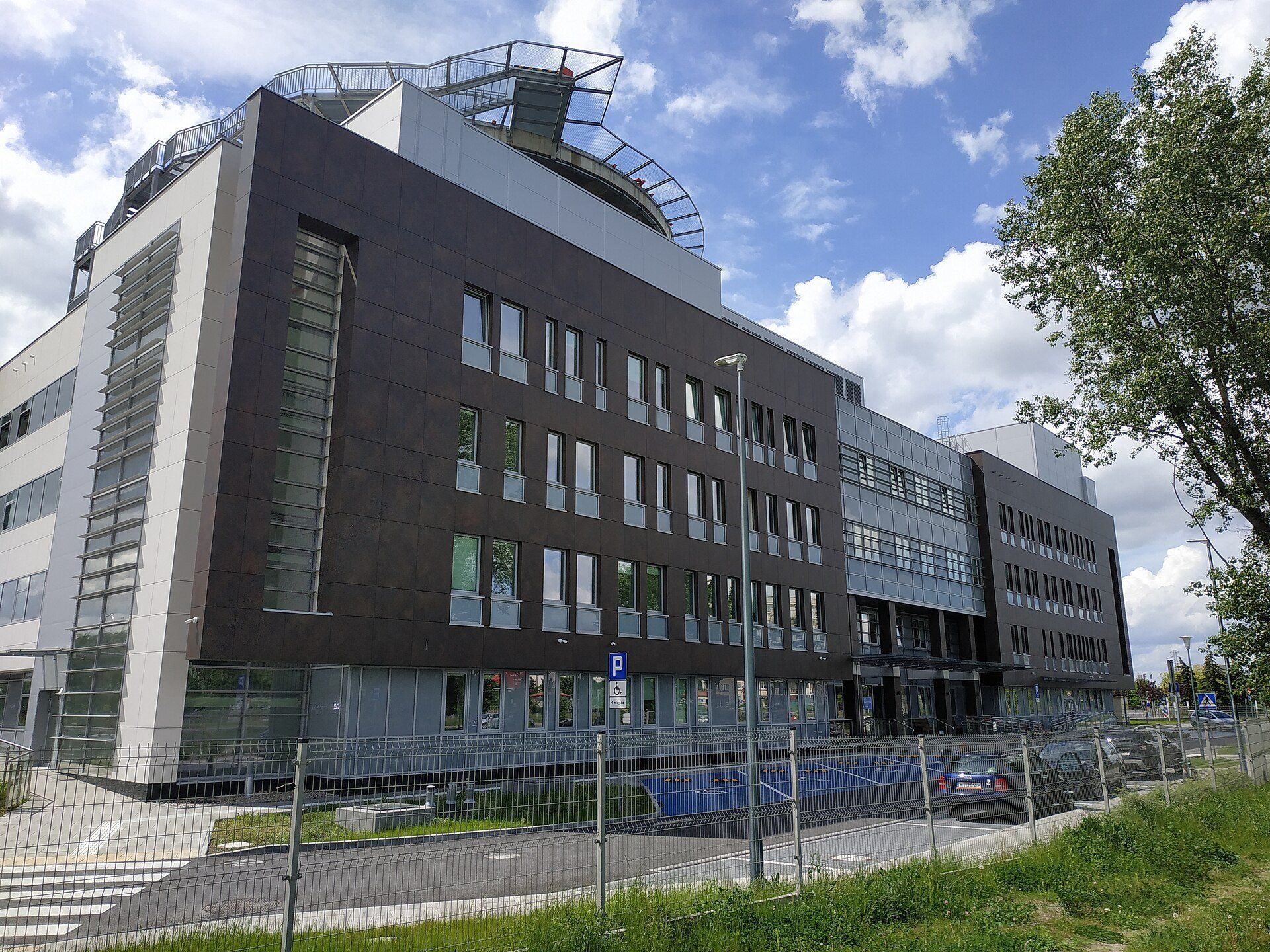
Let's start with the mechanism, because it is the mechanism, not a single name, that matters most here. As Patryk Słowik revealed on Kanał Zero, at the emergency department of Szpital Południowy (the Southern Hospital) in Warsaw's Ursynów district, politicians of the ruling Koalicja Obywatelska (Civic Coalition) and their relatives were being seen out of turn, straight away, with a separate "salonik," a side room with a sofa and armchairs to wait in. At the centre of the affair stands a young doctor, without experience, without a completed specialisation, but with membership in the party leading the coalition that governs Warsaw, a councillor of the capital, whom the hospital director appointed head of the emergency ward, and who, according to his own asset declaration, earned around 1.6 million złoty in 2025. Prosecutors are now checking whether this was merely scandalous or also criminal; the doctor was dismissed, the hospital's entire management was removed, part of the money was returned. But a "VIP lounge" at an admissions ward does not appear out of nowhere. Someone set it up, someone staffed it, someone ushered the right people into it. This is not one man's sin, it is a small system.
The one who was punished is the one who warned.
The most telling detail, however, is a different one. The first alarm was raised by the hospital's head of surgery. He did so back in mid-2025, and as a result a few months later he lost his job. He claims he notified city hall; city hall replies that no official letter ever arrived, and Rafał Trzaskowski himself insists that a private message on a messenger app "is not a channel for reporting irregularities" in a municipal company. The Zero.pl newsroom counters that he was informed via messenger back in July. I don't need to settle this dispute to see its shape: in this whole story, the only person who certainly and early on bore the consequences was the one who pointed a finger at the problem. The quarrel over who notified whom and when will probably drag on (the hospital, for that matter, has its own financial grievances against the head of surgery himself), but the mere sequence of events speaks volumes.
The Prime Minister's words and the Prime Minister's hand are two different things.
Then the matter went a floor higher. Donald Tusk reacted sharply: he spoke of a "truly degenerate system" and of the need to get to the bottom of it "all the way, no matter who it has to cost," and announced an inspection of the hospitals by the NIK, the Supreme Audit Office. Strong words. Except that I remember a different Tusk. In 2009, when the afera hazardowa, the gambling scandal, broke out, he did not deliver speeches. Within a week he cut loose everyone the affair touched: parliamentary caucus chief Zbigniew Chlebowski, minister Drzewiecki, and even his deputy prime minister Grzegorz Schetyna tendered his resignation. It was brutal, but politically it saved the government back then. Today, faced with his own people, that same hand does not rise. After all, the question was put directly: will the head of the party's Warsaw structures, Interior Minister Marcin Kierwiński, also be held to account? The opposition is demanding his resignation; he himself maintains that he never used that hospital and does not check who earns how much, and so far he remains in his post. Yet the real substance that fills any account of this reaction is words that promise everything "all the way" and a hand that touches none of one's own.
Two hospitals, or the official privilege and the quiet one.
There is an irony in all this worth naming. Poland already has, after all, its own official VIP hospital, the Państwowy Instytut Medyczny MSWiA on Wołoska street, formally tasked with the care of the highest state authorities and the diplomatic corps, the famous "setka," "the hundred." That is an open arrangement, decades old; the state has the right to decide that a designated facility looks after its most important officials. The scandal lies elsewhere. It lies in the fact that, alongside the official privilege, someone quietly cobbled together a second, unofficial one: a side entrance in an ordinary municipal emergency department, for people who already hold many other advantages over the ordinary citizen anyway. A state that, with one official VIP hospital, creates a second, hidden one, set up for small VIPs, has a problem not with procedure, but with its very nature.
The queue that doesn't lie.
And here we reach the crux, namely why this particular affair stings so much: because the side track is all the more infuriating the longer the normal track is. The average wait for a specialist in Poland has roughly doubled since 2012, to over four months; today, for instance, you wait nearly a year to see a gastroenterologist, almost two in the worst regions; about ten months for a dentist. Against that backdrop, a separate sofa and an examination "straight away" for the right people is no minor sin. And now the matter of money and systemic fraud.
In that very Szpital Południowy, one physician clocked nearly four thousand hours in a year; the national record, in Sosnowiec, is 4,881 hours, over four hundred a month, fourteen hours a day, day in, day out. Nobody who wants to keep their reactions clear-headed works like that. A sensible solution (a hard cap on hours, "a tachograph for doctors," as one health expert put it, exactly the way we count time for lorry drivers) exists on paper. The ministry's answer was to propose a cap on a doctor's earnings, while leaving the hours alone. We worry about how much a doctor earns; we don't worry about whether, after his three-hundredth hour, he can still read a test result.
What's left of all this.
Finally, the worst thing of all. What strikes me most is not the scandal itself, but how little it changes. Such affairs set the internet ablaze, the agencies count them in millions of mentions, people genuinely live and breathe them for a week. And then the polls barely flicker: for months the government has been stuck in the same bracket of thirty-something percent, the ruling party slips by a point or two, and none of it looks remotely like a collapse. That tells an uncomfortable truth about us. Either we have grown used to the fact that "the well-connected get served first," as if it were the natural order, or we have decided that none of the alternatives is any better. Neither conclusion flatters us. Someone will replace the young doctor, the management will be reshuffled, the inspection report will land in a binder, but the back door doesn't vanish because one person who used it got caught. It vanishes when standing in a queue stops being an activity reserved solely for people without connections. Until then, this is the end of no affair. It is the first episode of a series.
The Szpital Południowy case was revealed by Patryk Słowik on Kanał Zero; the course of the inspection, the dismissals and the opened prosecutorial proceedings were described by TVN24, "Rzeczpospolita," PAP and Wirtualna Polska. The Prime Minister's words about a "degenerate system" and getting to the bottom of the matter "all the way" were spoken at a briefing at the KPRM, the Prime Minister's office, on 17 June, and the announcement of the NIK inspection was reported by the Rynek Zdrowia outlet. The figures on waiting times come from the Watch Health Care Barometer, the numbers on doctors' working hours from Rynek Zdrowia's findings concerning the hospital in Sosnowiec, and the idea of "a tachograph for doctors" was formulated by Maria Libura in "Menedżer Zdrowia." The 2009 gambling scandal and the resignations of that time are recalled by the archive of "Rzeczpospolita." The above opinions I write on my own account.