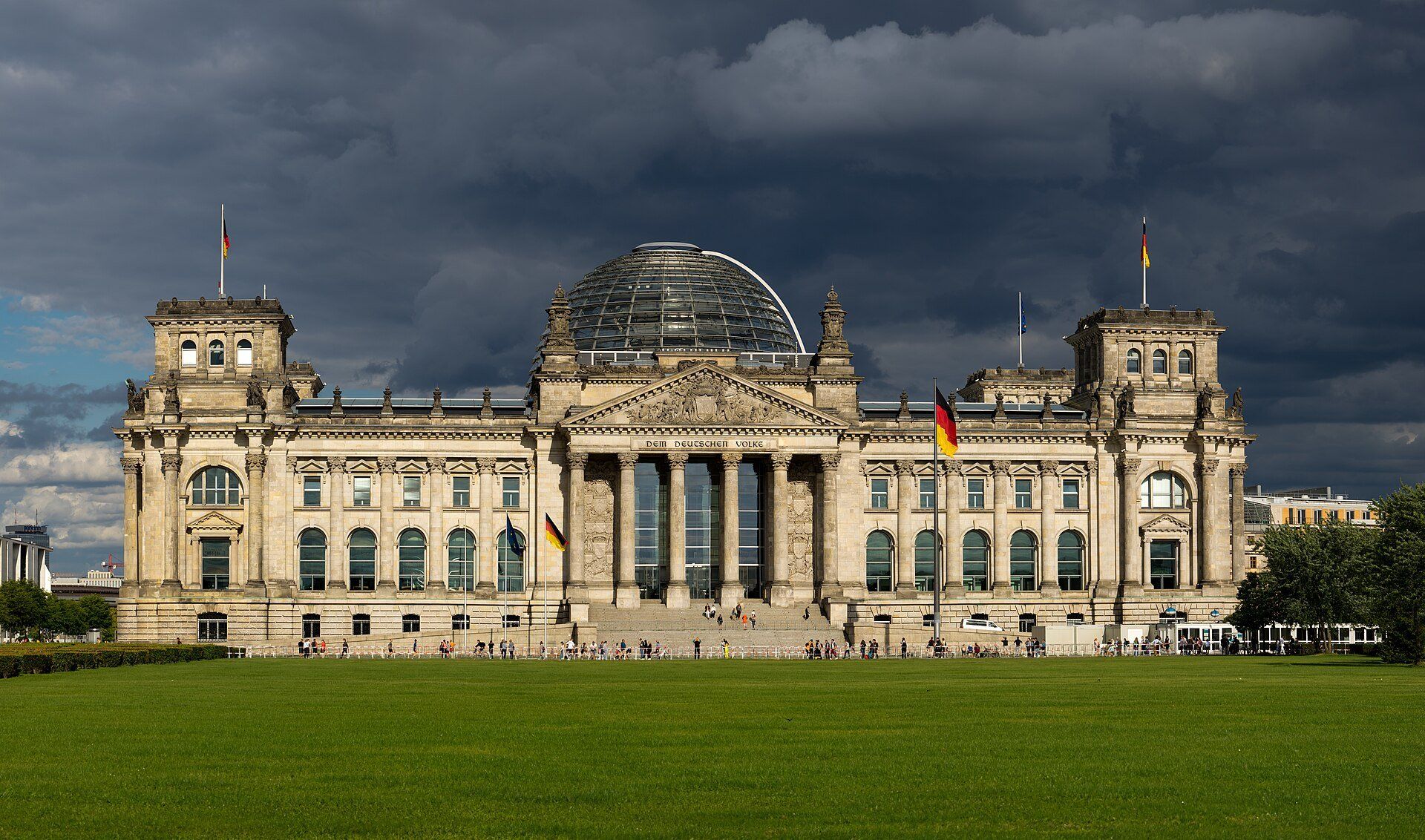
On 9 June 2026, German Finance Minister Lars Klingbeil received the first report of the independent German Investment and Innovation Council. The government is touting its “investment pace” thanks to the gigantic special fund SVIK (Sondervermögen Infrastruktur und Klimaneutralität), worth €500 billion, for modernising infrastructure and the climate transition. Klingbeil stresses: “What matters to me is growth, pace and transparency. Investment is gaining momentum.”
At the same time, the EY think tank reports for the first quarter of 2026 the first rise in industrial turnover in nine quarters (+1.7%), but alongside it a 2.3% drop in employment (127,300 jobs). Since 2019, German industry has lost 341,500 jobs.
Yet the global private equity giant Blackstone declares in an interview with “Handelsblatt”: “We would like to invest even more in Germany.”
These three sources paint a picture of a country that, on the one hand, is throwing billions onto the table, on the other is losing its industrial base, and on the third, where foreign capital sees potential but evidently runs into barriers.
The EY data are merciless. In the first quarter of 2026 German industry did record its first rise in turnover after ten quarters of decline, namely +1.7% year on year. That may suggest a turning point. But in parallel, a relentless process of laying people off is under way. Industrial employment fell by 127,300 jobs (–2.3%). Since 2019, 341,500 jobs have disappeared, a decline of more than 6%. The automotive sector has been hit hardest: since 2019, one in seven jobs has vanished.
This is not an ordinary cyclical recession. It is a structural erosion of the industrial base on which Germany built its economic standing. Weak sales results in previous quarters forced companies to cut costs, mainly by reducing employment. Even though the first quarter of 2026 brought a rebound in turnover, employers are in no hurry to hire workers. This makes it clear that the problems run deeper: high energy costs, bureaucracy, a weak economic climate in key export sectors and growing competition from Asia.
Looking critically at the EY data, the government can boast only of “record public investment” in 2027, for the third year in a row, but private industry, which usually generates real growth and jobs, is shrinking. The energy transition and green policy, though right in the long term, raise costs in the short term and accelerate deindustrialisation. Without radical measures to boost competitiveness, such as cheaper energy, simplified regulation and support for innovation, the billions from SVIK may end up going into infrastructure while factories keep laying people off.
The Finance Ministry presents SVIK as a “generational project”. €500 billion for roads, rail, schools, kindergartens, housing and hospitals, with projects able to be carried out over 12 years. Klingbeil speaks of “tangible growth impulses”. In its first report of 9 June 2026, the Investment and Innovation Council (IIB) stresses the need to prioritise research and development (R&D), crucial for a country poor in raw materials, and to mobilise private capital. The Council's deputy chair, Ann-Kristin Achleitner, calls for a coherent innovation strategy linking the special fund, the core budget and the climate and transformation fund. Chair Harald Christ demands greater transparency, including from the federal states and municipalities, as well as faster planning and approvals.
After years of underinvestment in infrastructure and delays in the energy transition, the German government is throwing in gigantic sums of money. The question, however, is: is the system capable of spending it effectively? German bureaucracy and federalism are notorious for their slowness, so planning, permits and implementation take years. The IIB itself calls for a “higher pace” at all levels, which is an admission that the current pace is insufficient.
In an interview with “Handelsblatt”, Jonathan Gray, the chief operating officer of Blackstone and the number two at the world's largest private equity fund, declares openly: “We would like to invest even more in Germany.” The firm sees value in German know-how, particularly in the context of the AI boom. Blackstone plans greater involvement in selected sectors, most likely those that combine the traditional strength of German industry (engineering, precision) with new technologies.
This is a positive signal. International capital is not fleeing Germany; on the contrary, it perceives undervalued potential. Germany has a strong Mittelstand, a skilled workforce, a position in key technologies and now an opportunity in AI. Blackstone, as an institutional player with enormous capital, is ready to move in more aggressively if conditions are favourable. But this is where the sharpest criticism arises. If Blackstone “would like more”, then why is it not already investing at full scale? The answer lies in structural barriers, such as complicated and lengthy administrative procedures, high energy costs, regulatory uncertainty around the climate transition, and tax and bureaucratic burdens on large investments. Private equity likes a stable, predictable environment with clear rules and fast decisions. Germany, in many areas, does not offer this to a sufficient degree.
The government boasts of mobilising private capital, but the EY data show that domestic industry is losing faith in the future and is laying people off instead of investing and hiring. Blackstone may indeed move into selected projects in AI, infrastructure, and perhaps green energy, but it will not replace the industrial base lost in automotive or machinery.
The government is throwing €500 billion onto the table and setting up advisory councils to speed up public investment. Industry, despite a slight rebound in turnover, is continuing to cut employment on a structural scale. International capital (Blackstone) sees an opportunity in this. This is rather an attempt to patch over symptoms with gigantic public spending, while the causes of the competitiveness crisis remain largely unresolved. Record public investment in 2027 may improve infrastructure, but without simultaneously strengthening the private industrial sector, such as cheaper energy, simplified law, support for innovation and the retention of jobs, Germany risks a “two-speed” model: modern public infrastructure alongside a shrinking industry that is losing jobs.
For Poland and Central Europe this is an important lesson. At the same time, Germany's weaknesses open up opportunities for countries that offer better conditions, including faster administrative decisions, stable and cheaper energy, predictable regulation and attractive incentives for private investors. Blackstone shows that capital is willing; the only question is whether Germany (and the entire EU) will create an environment in which this capital actually flows into industry and innovation, and not just into selected niches.
The Klingbeil government is right about one thing, that the pace of investment must be higher. But a higher pace does not come from yet another fund or council report; it comes from bold, structural reforms that will restore German industry's faith in the future and convince investors like Blackstone that, instead of “wanting more”, they will invest genuinely more. Without that, the €500 billion may turn out to be only an expensive, but not necessarily effective, road to lasting growth.