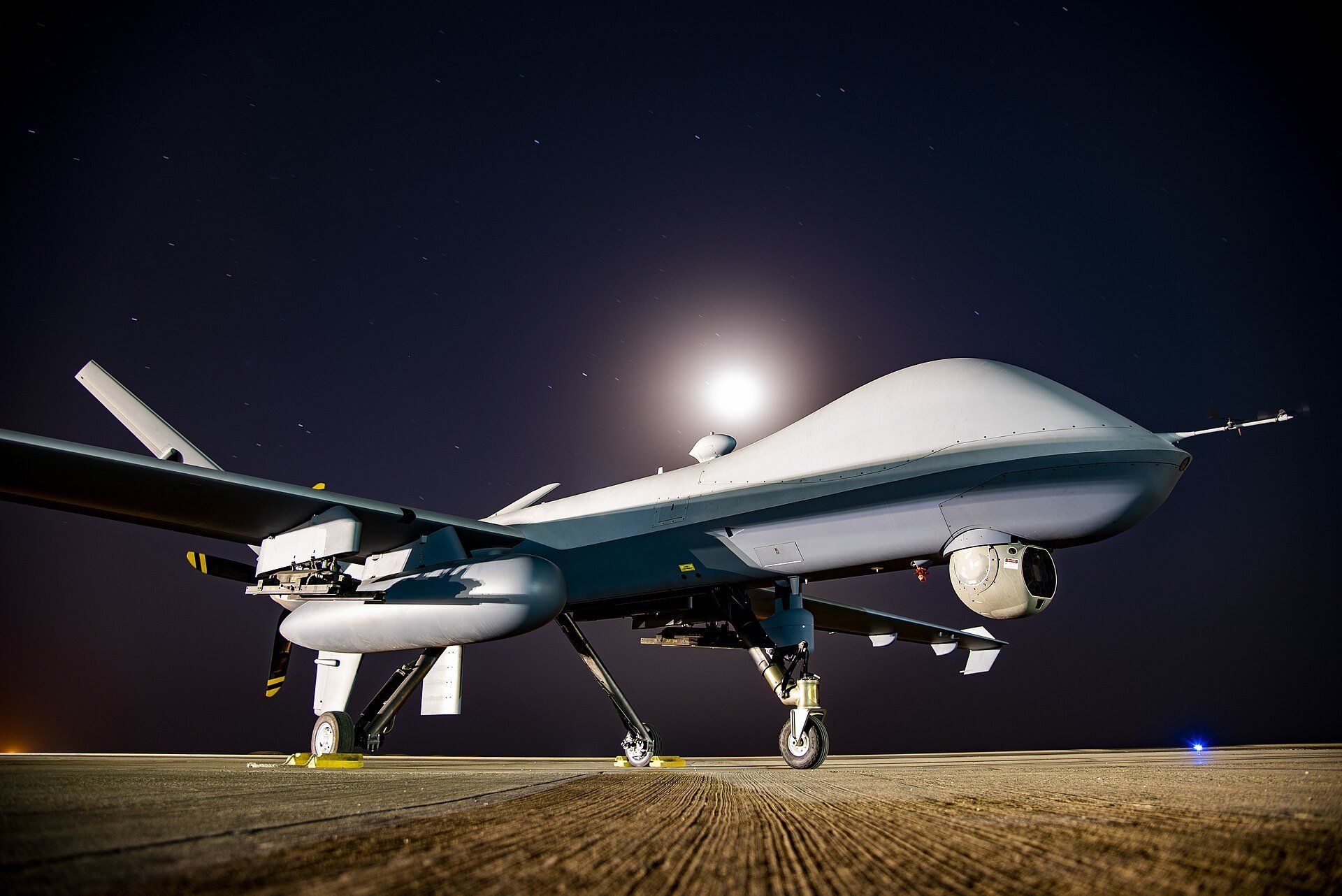
In every drone that falls over the Ukrainian front today – no matter whose it is – there is a piece of China. Rare-earth metals, without which no rotor will turn and no sensor will lock on, pass for the most part through Chinese refineries, and the magnets for the motors come from the Middle Kingdom in nearly nine cases out of ten. Hence the conclusion I want to start with: how long this war lasts is decided neither in Washington nor in Moscow, but in Beijing. All the rest is trade. Hard, cold trade, only wrapped in paper that reads “aid.”
The proving ground, or the world's only shop for combat-proven weapons.
Over the years of war Ukraine has perfected two things. The first is a proving ground – the only place in the world where new military technology can be tested not in a Nevada desert, but in real combat, in an environment of radio jamming and under anti-aircraft fire. This is not my metaphor. The Ukrainians have built an entire mechanism around it: the Brave1 platform runs a program with the literal name “Test in Ukraine,” under which foreign companies can put their equipment to the test at the front and receive a report from the battlefield. The scale is staggering – in 2025 Ukraine produced more than four million drones, and this year it is aiming for more than seven. Monthly production of FPV drones alone jumped from twenty thousand to two hundred thousand.
And here we come to the heart of it. Ukraine did not stop to weep that it is paying the blood sacrifice while the world merely looks on. It learned to forge that blood into an asset. Access to the proving ground costs money – to fire your own drone in the latest battlefield conditions and see how it behaves, you have to pay a great deal. And that, incidentally, is where these billions paid to Ukraine by the whole world come from. They call it “aid,” yet in large part they are paying for access to knowledge that cannot be bought anywhere else. Europe alone has already handed Ukraine more than two hundred billion euros, more than the United States, and at the top of the donors measured against the size of their economies are not the great powers at all, but Scandinavia and the Baltic states. This is not philanthropy. It is an investment.
A security provider, or drones for Patriots and Gripens for access.
The second thing Ukraine has perfected is the role of a global security provider. At the end of April, Kyiv announced ten-year drone deals with the United Arab Emirates, Qatar, and Saudi Arabia – worth billions of dollars, covering arms exports and joint production lines. An Emirati defense concern is preparing to buy out one third of the shares in a Ukrainian drone manufacturer, and Abu Dhabi alone ordered five thousand interceptor drones, Qatar two thousand. Ukraine does not sell this cheaply, and the bottleneck is not the machines themselves but the operators who know how to use them – and these too Kyiv “lends out.”
The trade flows in every direction. Ukraine is the only proving ground on which the American Patriot genuinely contends with Russian ballistic missiles, and it resells this priceless knowledge to the manufacturer, passing data on every strike straight to the defense concern across the ocean. In exchange it negotiates deliveries of further missiles and barters its own interceptor drones for American rockets. Sweden, which for years was regarded as a generous donor, suddenly sells and hands Ukraine Gripen fighters. Norway has been in the top tier of support for years. All of this is called “humanitarian aid,” “European values,” “Santa Claus” – whatever it suits anyone to write on the wrapping. And underneath lies cold, hypocrisy-laden trade that only pretends to be altruism.
The minerals deal, or paper that reeks of empire.
The best proof that this is a transaction and not charity is the American-Ukrainian Reconstruction Fund agreement signed on April 30, 2025. On paper Ukraine retains ownership of its raw materials and contributes to the joint fund half of the revenues from new extraction projects – titanium, lithium, uranium. Formally this is not repayment of past aid in kind, and that must be said honestly, because the final version is milder than Washington's original demands. But when I read the clauses about half the revenues from every new deposit, I find it hard to shake the impression that I am looking at something one former Ukrainian official called outright a colonial agreement. Aid less and less resembles a gift, and more and more a security pledge against the future wealth of a country that is bleeding today.
The stopwatch in Beijing, or who really deals the cards.
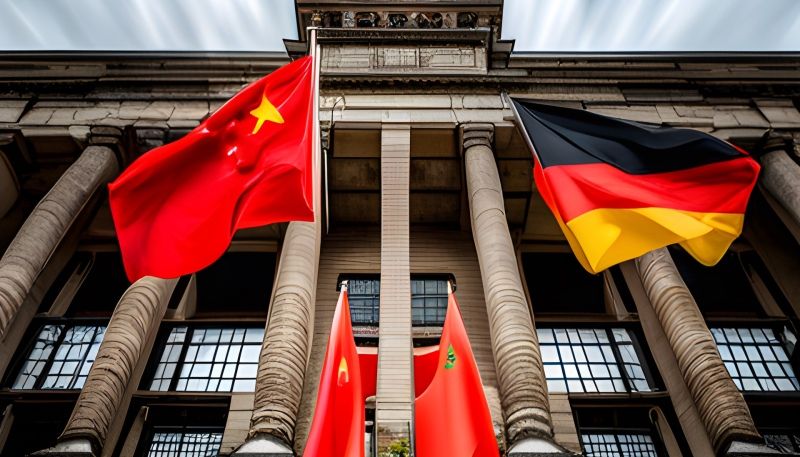
And here we return to the beginning. This whole gigantic machine – the proving ground, the drone exports, the technology barter – rests on a foundation controlled neither by Kyiv nor by its Western sponsors. China refines between eighty-five and ninety percent of the world's rare-earth metals and produces the majority of the advanced magnets without which no drone will fly. In the autumn of 2025 Beijing tightened export controls on these raw materials and prices in Europe shot sharply upward. The paradox is that the drone components of both warring sides come from China one way or another – Russia collects its own “donations” for access from Beijing and North Korea in exactly the same way. This means the key to the tempo of this war lies in a Chinese refinery, not in a European parliament. All sides are perfectly aware of this and play the game quietly.
With a Cool Head
Why am I saying this? Because as long as we look at this war through tears of emotion and a wrapper that reads “aid,” we will forever be a figurehead in it who pays and gets emotional, rather than a player who counts. This is a market – a brutal market in weapons, technology, and access, on which everyone pursues their own interest and no one gives anyone presents. Poland must learn to stand on it the way others stand: to know where it is indispensable, and to demand something concrete in return, instead of moralizing about a transaction whose rules it does not even want to acknowledge. And looking at the price of magnets and rare-earth metals, it is worth remembering who really holds the stopwatch in this game.
Beneath this text lie: data from the Kiel Institute's Ukraine Support Tracker on the scale of Western support, materials from the Ukrainian platform Brave1 and its “Test in Ukraine” program, the findings of the International Energy Agency on Chinese dominance in the refining of rare-earth metals and the production of magnets, reports by Reuters, the Financial Times, the Kyiv Independent and Defense News from 2025–2026 about the drone contracts with the Persian Gulf and about the Swedish Gripen fighters, and finally the contents of the American-Ukrainian Reconstruction Fund agreement of April 30, 2025. The interpretation is mine.