Around 2.5 million people of Polish descent live in Germany, and Polish diaspora organizations have for years played an important role in sustaining the language, culture and historical memory. Increasingly, however, questions are arising about who represents the Polish community today and what significance new initiatives financed from public funds have. The matter concerns not only the organizations but also the vision of Polish identity beyond the Oder.
The German Polish community officially numbers around two and a half million people of Polish descent, according to data from the Bundesamt für Migration und Flüchtlinge (Federal Office for Migration and Refugees) and the estimates of the Związek Polaków w Niemczech (Union of Poles in Germany). It is one of the oldest and best-organized Polish diasporas in Western Europe. Its history reaches back to the nineteenth-century labour emigration to the Ruhr basin, and its culmination was the activity of the Związek Polaków w Niemczech, known as ZPwN “Rodło”, founded in 1922. For decades this organization defended the rights of the Polish minority, ran Polish schools and publishing houses. The seat of the ZPwN, namely the Polnisches Haus (Polish House) in Bochum, remained for nearly a hundred years the physical and symbolic centre of Polishness in Germany. At present, in place of the ZPwN, an organization fighting for rights and for Polishness, new constellations financed by the German public authorities are appearing which, one might get the impression, have little in common with Poland and Polishness.
Over the last dozen or so years, however, a process can be observed that may be described as a deliberate transformation of the Polish diaspora structures. In place of the traditional organizations, rooted in history, language, culture and the collective memory of wrongs, including war reparations, new entities are moving in. They are “European”, integrationist and broadly financed from German federal programmes. A key role in this process is played by figures such as Prof. Krzysztof Ruchniewicz and Joanna Szymańska-Bica.
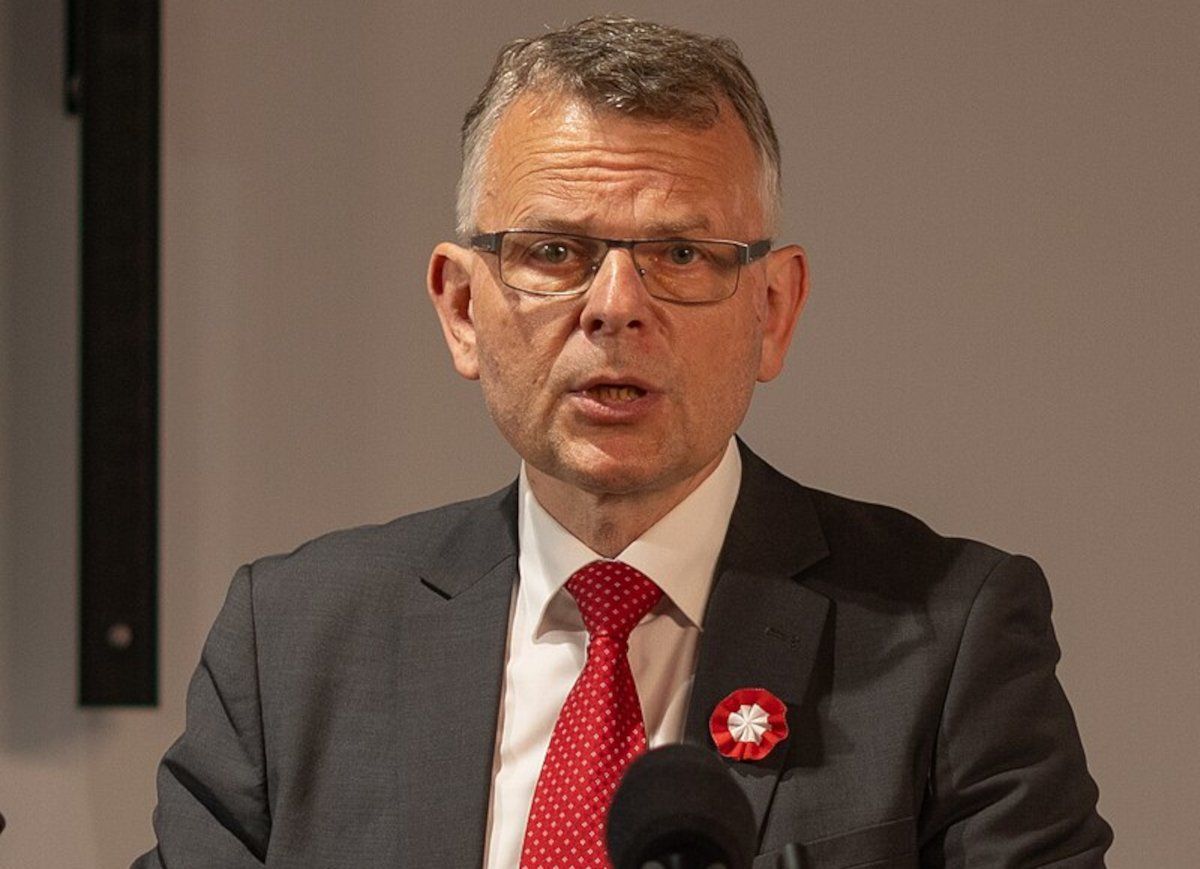
Prof. Krzysztof Ruchniewicz, born in 1967, a historian and Germany-specialist from the University of Wrocław, since April 2026 has held only the position of visiting docent, paid by the German organization DAAD (an organization dealing with international student exchange - editor's note) in Bochum at the chair of contemporary history. For years he has been deeply involved in the Porta Polonica project, that is, the Documentation Centre for the Culture and History of Poles in Germany, located precisely in the former Polnisches Haus in Bochum. He was a member of the board of trustees, a co-creator of the centre's concept in the years 2011-2013, and remains its academic advisor. One would, however, look in vain there for academic research. The centre is financed institutionally from the federal funds of the Federal Republic of Germany, that is, around three hundred to three hundred and fifty thousand euros annually from the federal budget, as well as from the funds of the state of North Rhine-Westphalia and the city of Bochum.
Krzysztof Ruchniewicz ceased to be the Head of the Pilecki Institute at the beginning of 2026 amid an atmosphere of scandal. The media wrote not only about the improper management of the institution but also about a strange relationship with Urs Unkauf, a German lobbyist sympathizing with the Russian Wagner Group.
Our German-language sources claim that it was Krzysztof Ruchniewicz who is said to have pointed out Joanna Szymańska-Bica to the German decision-makers as a leader of the Polish community in Germany and to have demanded support for her.
Joanna Szymańska-Bica, employed at the Polska Rada Społeczna (Polish Social Council) based on Oranienstraße in Berlin, appears to be a figure ideally fitting into the new logic. The Polska Rada Społeczna is a Polish diaspora organization which, since the 1980s, has helped Poles with integration, providing social and legal counselling as well as psychological support in matters of everyday and professional life. As Szymańska-Bica, as she writes in reply to our question, holds dual Polish and German citizenship and lives legally in Germany.
- I am employed under the federal programme “Demokratie leben!” at the Federal Ministry for Family Affairs, Senior Citizens, Women and Youth. - Szymańska-Bica writes in an email to our editorial office.
This programme, with a budget of around one hundred and ninety-one million euros annually, aims to strengthen democracy, combat extremism and support the integration of migrants. In practice it often finances projects promoting a European identity at the expense of the national one. One such project is a local project under the Partnership for Democracy which, as the organizer describes, sensitizes young people (adolescents and young adults from the age of 14) “to a European identity and actively dismantles nationalist patterns of thinking”. The project emphasizes that democracy, diversity and cohesion in Europe are stronger than national self-segregation, in accordance with the aims of the “Demokratie leben!” programme.
In reply to our questions, Szymańska-Bica emphasizes that her functions are anchored democratically both in the associations and politically. The Polska Rada Społeczna, founded in 1982, deals above all with social counselling, integration and the civic participation of Poles in Germany. The organization is active in Polish-German events in Bochum and the surrounding area, often within the framework of and on the payroll of the “Demokratie leben!” project. Szymańska-Bica appears increasingly often on panels, in podcasts and at forums in the Polish-German context, often noting that she does not feel Polish and that her heart is blue with yellow stars. It seems that Polish identity matters do not lie within the sphere of her interests. Instead, she carries out anti-discrimination workshops, EU participation projects, local politics and inclusive memory.
And here the German side finances and promotes new Polish diaspora elites who are loyal to the local authorities and the EU agenda. One such example is the Cooperative Association for Diversity and Cohesion. Its main goal is to promote equality of opportunity, active social and political participation, and harmonious coexistence within German migration society. The project focuses on combating discrimination, anti-Slavism and exclusion, as well as on strengthening intercultural dialogue. Within the framework of the initiative, six migrant organizations operate - among others the Turkish Community in Germany and the Federal Association of Russian-Speaking Parents.
The shift of support from the conventional Polish community in Germany to new institutional constellations is not a conspiracy but the logic of power. The German state, like other Western countries, prefers partners who do not complicate bilateral relations, do not recall inconvenient history and do not build alternative centres of loyalty. The “Demokratie leben!” programme and similar initiatives constitute an ideal tool. They finance democratic and civic projects, while at the same time marginalizing those that may be perceived as nationalist.
Joanna Szymańska-Bica and Krzysztof Ruchniewicz do not operate in a vacuum. They are part of a broader phenomenon of the Europeanization of the Polish community, a process in which the old organizations are gradually being displaced by new ones, more compatible with the dominant order.