The journalist Aleksandra Fedorska did not receive accreditation for the Polish-German Forum organized at the Embassy of the Republic of Poland in Berlin. The organizers cited a limited number of places, but the author believes that the matter requires clarification and announces that she will take legal steps as well as seek the intervention of organizations dealing with media freedom.
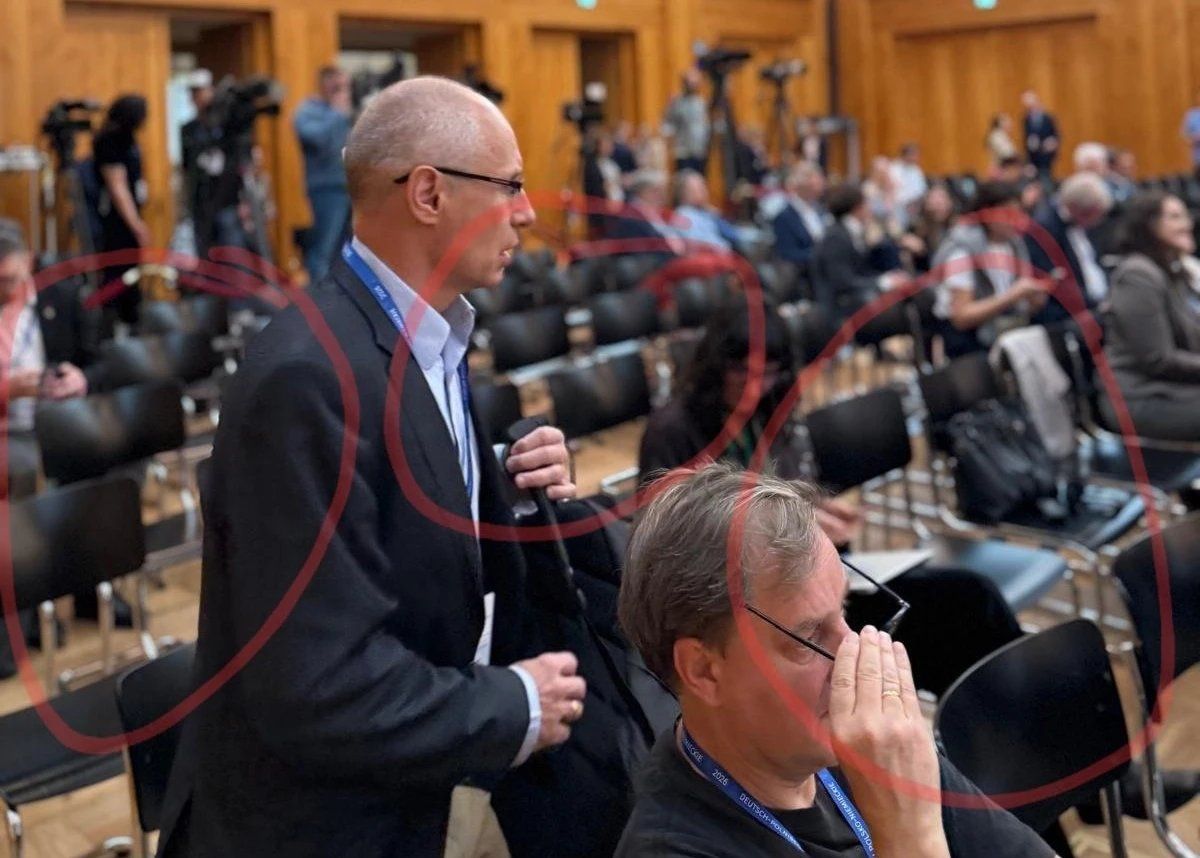
I submitted the accreditation application two days before the deadline and in accordance with the procedures. Despite this, I received a reply that, owing to the “limited capacity of the hall and high demand” (below, a photo of the hall with empty chairs), I had been placed on a waiting list. Ultimately accreditation was not granted, with the argument being a lack of places, which I reported publicly on the X platform, announcing that I would refer the matter to a lawyer and to international journalists' associations.
The Polish-German Forum is a prestigious platform for dialogue, organized by the Foundation for Polish-German Cooperation in cooperation with the Ministry of Foreign Affairs of the Republic of Poland and the German Auswärtiges Amt (Federal Foreign Office). This year it focused on geopolitical challenges, security and the 35th anniversary of the partnership. Accreditation for journalists ought to be granted in accordance with the principles of transparency and equal access to public information.
Under both Polish and German law, as well as in the context of international and EU law, press freedom is protected at the highest level. The Constitution of the Republic of Poland, in Article 54, guarantees the freedom to express views and to obtain and disseminate information. The Press Law Act imposes on public bodies the obligation to facilitate journalists in carrying out their profession. In turn, the European Convention on Human Rights, in Article 10, and the rich case law of the European Court of Human Rights, emphasize that journalists' access to events of public significance constitutes an essential element of freedom of speech. Any restrictions must be proportionate, necessary in a democratic society, and cannot be arbitrary or discriminatory in character. In the case of events organized by state institutions, such as the Embassy of the Republic of Poland, accreditation is not a privilege but a tool enabling the fulfilment of the journalistic mission.
The argument about a lack of places cannot automatically justify a refusal; the organizers have an obligation to provide appropriate infrastructure or to apply objective and transparent selection criteria. The selective treatment of journalists, especially those taking up subjects inconvenient for the authorities, may be regarded as a form of censorship or of impermissible discrimination. In Germany, similar cases have repeatedly ended with interventions by administrative courts and journalists' associations.
In this case, I have solid grounds to challenge the decision before an administrative court, to lodge a complaint with the Commissioner for Human Rights, and to notify international organizations dealing with media freedom.